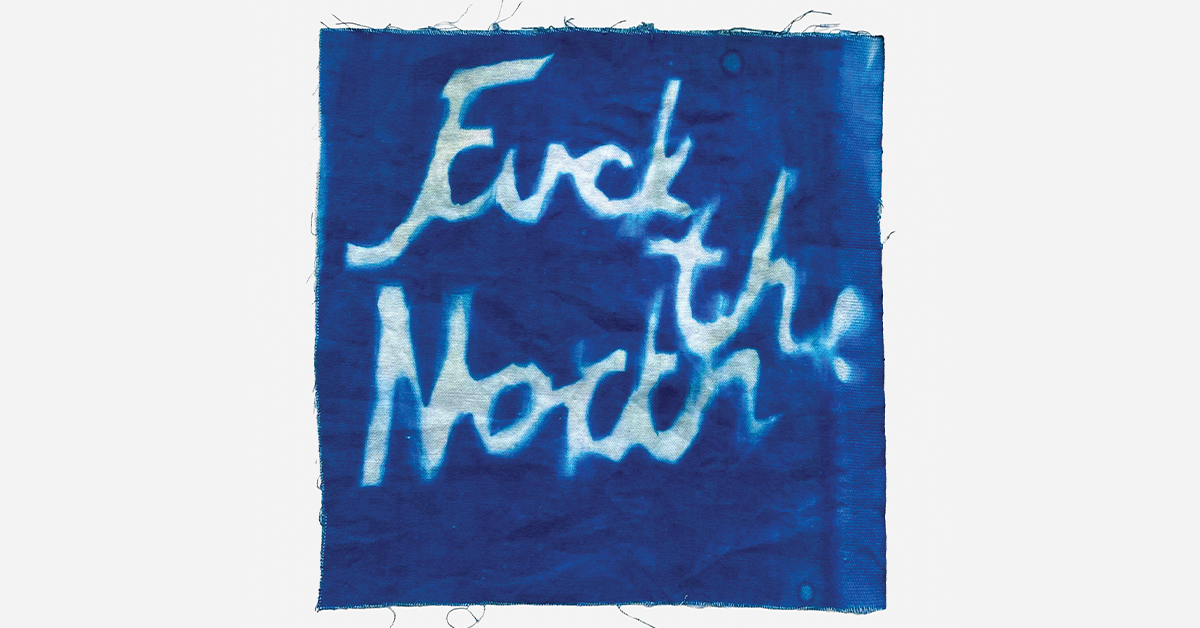
In recent days, a great spat has broken out over left Twitter (I refuse to call it X), at the centre of which lies – to the best that I can tell – differences over the question of abolition. It was triggered by a senior editor of Jacobin magazine writing a post-mortem on so-called ‘woke one’ for the New York Times. I have absolutely zero interest in litigating any of the arguments involved on either side. What I would like to insist upon, however, is something very simple, and I’m sure very familiar to us all already: we need to get off Twitter.
It goes without saying that these platforms are not neutral mediums; they are, from top to bottom, terrains designed and operated by the enemy, whose primary purpose is to block any reasoned deliberation from taking place, and to funnel our activities into hyper-competitive gambles for attention. I do not use Twitter much anymore, and when I do, I am met with precisely the same feeling that Adorno (wrongly) attributed to the cinema: “every visit leaves me, against all my vigilance, stupider and worse.”
I do not insist on this because I think that, if we stepped away from these platforms, all divisions would wither away. On the contrary, the problem is how to institutionalise appropriate channels for intra-left conflict, channels that can produce a certain ‘unity-in-difference’ across different ideological currents and organisational fractions. Such channels might look something like this magazine, perhaps; and I also welcome the new editorial direction at Tribune, for its willingness to give space for both sides of another recent intra-left dispute, as well as turn its pages over to dispatches from a diversity of organisers for the next issue.
But this goes beyond Twitter. That the Jacobin editor (and they are not alone in this…) in question felt compelled to write a piece punching-left for the New York Times again speaks to the weakness of a left media ecosystem, whose wider popularity in part depends on its ability to imitate the dominant ideological forms of that which it opposes. Thus one finds the tendency for high-profile commentators to be integrated into hegemonic apparatuses as the Good Communist™, always willing to air the movement’s dirty laundry to editors and audiences that are more than happy to listen, insofar as it confirms their existing biases.
To reiterate: intra-left political differences do exist, and some are more important than others. But very rarely do these require the ham-fistedness or arrogance characteristic of the way they are presently conducted – you are not Lenin writing for Iskra. Corollary to this, we need to get into the habit of thinking difference and conflict as productive, and of understanding the productiveness of these differences within an “ecology of organisation”. Jacobin has its functions, and its limitations; our job is to think through both of these in such a way that we can increase our collective capacity to act, which involves different tasks, different scales, and different mechanisms, without moralisation and purity tests.
And if one recoils at the possibility of collaborating with agents with whom one fundamentally disagrees, if one thinks that such differences cannot be overcome, then two things should follow: first, we still require appropriate channels to determine where exactly, and in what form, these fundamental differences consist; and second, one might find it useful to recall Marx’s clarification, in the 1850 March Address to the Communist League, that
The relationship of the revolutionary workers’ party to the petty-bourgeois democrats is this: it cooperates with them against the party which they aim to overthrow; it opposes them wherever they wish to secure their own position.