As we send this second issue to print, there has been an explosion of resistance across Europe and the wider world. Protests in the Spanish State against profiteering in housing have spread throughout its territory and into neighbouring Portugal. In France, working-class youth protesting school conditions faced violent repression, leading to protests across schools, workplaces, and into the streets. Italian, Belgian, and German students have now joined in the occupations and marches. In the North of Ireland, loyalists’ attempts to march down Garvaghy Road were met by resolute blockades, to the victory of the community. In India, in the face of significant repression, activity grows in the defence of the Cockroach Janata Party and against the state. In Albania, after months of protests against corruption, October saw sustained clashes with police and a spreading of militant action across the country. Every day more protests seem to occur, another country joins, or tactical escalation happens.
In Britain, whilst rumours circulate and uncertainty grows about how we will rise to the challenge set by our international comrades, we have far more mundane concerns. Much of the left has been disorganised by Burnham’s claims to renew Labour and others have been forced into a rearguard action, unsuccessfully attempting to elect Polanski as a Green MP. Despite Zionism absolutely being a form of racism, certain sections of the British Left have tripped over themselves to introduce “nuance” into the matter, aided not just by forces on the right of the Greens, but by ruling parties and the media.
For those who are committed to a communist horizon, it is hard to stomach the embarrassment of this display, the limited political horizon of the broader left here, and the disorganisation of our forces. The British left is fragmented between comrades trying to agitate for more principled socialist and anti-imperialist politics within the Green Party, the various far-left groups, whose leadership continue their regular schedule of sect reproduction, alongside a minority of people foolish enough to remain within the so-called Labour Left. In addition to these, we have several people radicalised into political commitments due to the global solidarity struggle for a free Palestine, trans people organising against an increasingly invasive British state and others who, whilst involved in emancipatory movements and have growing political commitments, have no organisational affinity.
We aim to change this shitshow, albeit as one communist magazine amongst a minority of militants. Therefore, as a publication, we affirm the need to unite and recompose the political forces of the working class and to generalise the fight for the political and cultural leadership of the workers’ movement as a struggle at the level of the state. This second issue of Prometheus Magazine focuses on two lines of investigation: how we do political work that empowers us as an oppositional force, and how we relate to this massive structure that exists and dominates our lives, the State.
In “Andy Burnham and His Productive State: Or, How I Learned to Stop Worrying and Love the Military-Industrial Complex”, Finlay Ellis looks at the underlying theory of the state behind Andy Burnham’s so-called Manchesterism and how it relates to British militarism. As some forces to the left of Burnham still cling to this “Productive State” as a tool for better state management of our dispossession, Ellis reminds us that the bourgeois state, regardless of its Starmerite or Burnhamite facade, denies us any sovereignty over our lives.
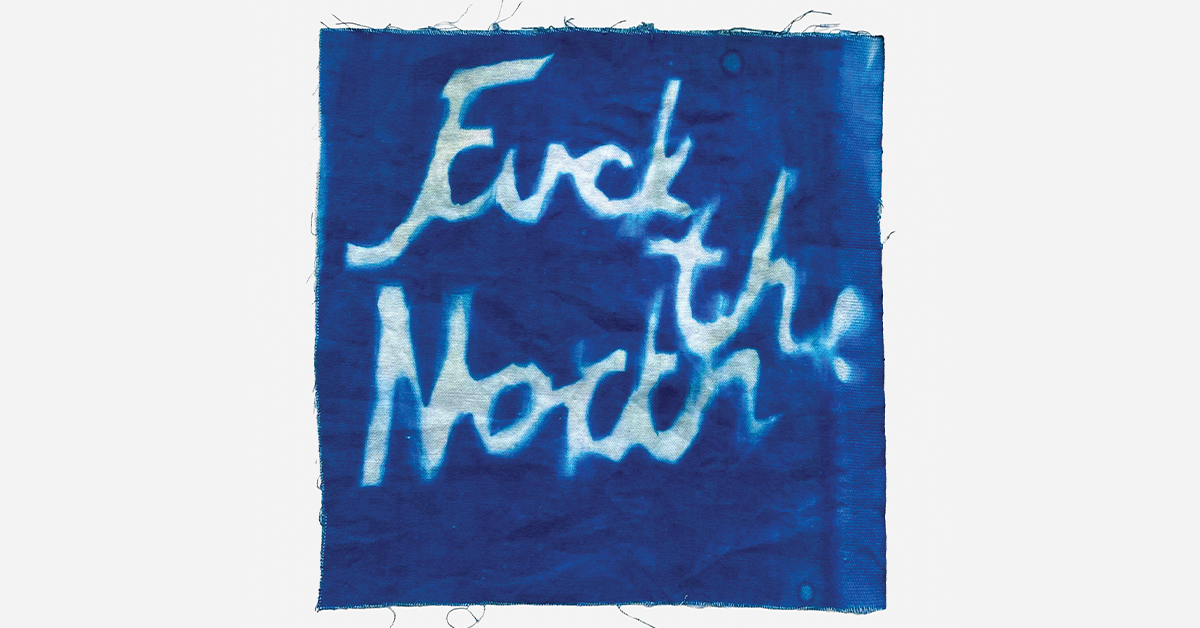
In “Fuck the North”, Harry Holmes untangles the various mythologies of the North of England, trying to demystify the spatial and class dynamics within and across English regions. Holmes investigates how the complicity of the regional bourgeoisie, deindustrialisation and the unrealised dream of reindustrialisation post-Thatcherism altered the class terrain of the North of England and how a (counter)hegemonic movement must navigate a deeply uneven Britain. Following, Harry Holmes interviews Jonas Patrick Marvin about his recent book “The Breaking of the English Working Class”. Holmes and Marvin discuss the narratives of the “left-behind” across recent decades and how class is experienced across space and time. Marvin elaborates on his concept of “disorganised abandonment” and what new opportunities lie on the horizon for our political interventions.
As the struggles of youth and students across Europe reveal the wider capacity for mass working-class resistance, the Prometheus International Press Squad (P.I.P.S) reports on the October 17th protests in Paris, and the growing protests in Portugal in “Riot Tourism & Portugal Joins In”. Stressing that the riot is never quite enough, we affirm the leadership of the working-class youth and the necessity of an unrelenting struggle in all spheres of political and civil society. In “Political Work, the Marxist Programme and the Method of Hegemony”, magazine editor Andreas Chari builds on this impulse and argues that a return to Gramsci’s concept of hegemony as a method of political work can clarify how and why we engage in mass work; what its character should be vis-à-vis the state, and how unity around a political programme acts as a gambit to improve our current fragmented communist movement. In “Rights or Liberation? Notes towards a trans Marxist strategy”, Sylvia McCheyne focuses on how the trans community can resist state repression and move beyond the political fatalism endemic in radical trans organising using Action for Trans Health as a case study.
Continuing, Steve Ribble reviews Jean-Luc Mélenchon’s Now, the People! in “The Last Populist: Mélenchon and ‘Now, the People!’”, looking for the political reasons for the continued survival of Mélenchon’s left-populism. Finally, in “Right Against Right: The USSR vs. the USA in the Battle for Human Freedom”, we offer an excerpt from Patrick Higgins’ introduction to Human Rights in the Soviet Union and the United States by Albert Szymanski, recently republished with Ebb Books and Liberated Texts.
We conclude this editorial with an affirmation of our solidarity towards all anti-imperialist struggles, in particular the struggle against the Zionist entity in West Asia; the cauldron of class struggle that is the growing youth protests in Europe and elsewhere; and any emancipatory movement that wants to see a world beyond the bourgeois state, imperialism and Capital as a whole. As the revolutionary masses renew a confrontation with the State and direct class struggle becomes the order of the day, we heed Antonio Gramsci’s words: “Our conception of the world can be summed up in the profound conviction that evil shall never prevail”.