Did you know Andy Burnham is from the North of England? Easily missed. He only lets it out in quiet moments. It burst out when he visited Kiev, reaffirming British support for the bloody war there. Troops, having spent years on the front line, had to suffer further as he decided to play the Smiths on guitar. When he announced his election campaign, he subtly invoked Northern Soul, with his slogan “change Labour, keep the faith”. When giving a social media “tour” of his office in Number 10 North (a policy announcement which he certainly kept quiet), he was forced, under duress, to show a gold disc of The Queen Is Dead. He is certainly quiet about his relationship with Greater Manchester, as well as its influence on his political project. Or at least, one could dream.
The return of Labour’s fortunes has been individualised – the so-called Burnham Bounce. This personalisation is inseparable from the sickening and constant invocation of Burnham’s northerness – at its most extreme expressed in the moniker King of the North. Despite the novelty Burnham claims, no significant break from the political core of Starmerism has occurred; he is doubling down on it by attempting to push through fossil expansion, close civic space and escalate war against Yemen. It lumbers on, relying on him and his regional identity to distinguish itself.
Inundated with waves of imagery from the North of England, one increasingly tangible response is to just scream F*ck the North.
To be clear, F*ck the North is a tongue-in-cheek provocation.1 It is written by someone from the North of England, who misses their home, despite the below. What it argues is that there is no path towards understanding class in England today without demolishing some of the mythologised ways in which it is discussed – not least of all the substitution of regional identities for deeper social divides. The North in this essay isn’t simply a set of towns in the North of England, but is a shorthand for discussions of the “left behind” areas, supposedly deindustrialised, down on their luck, and recurrent in political discussions.
This is not a denial of regional inequalities. It is a well-established fact that Britain is one of the most geographically uneven economies in Europe.2 Not only are there consistent income gaps between different local authorities across Britain, but they have remained remarkably consistent for the last 30 years.3 In England’s regions, only the North East comes close to the spend-per-head of London. That spend tends to be a bigger chunk of economic activity outside London, as government money is used increasingly to cover the costs of health, ageing, and the impact of work, or its lack, in these areas over the decades. As a result, according to the ONS:
In 2020 to 2022, at birth, males in the most deprived areas of England were expected to spend 70.4% of life in “good” health, compared with 84.5% in the least deprived areas; during the same period, for females, these figures were the lowest since our time series began (2013 to 2015), at 65.1% and 81.5%.4
That is to say, if you are born outside of wealthier areas, you are going to get sicker quicker and live shorter lives. This divide has grown and consolidated over the years – reflecting that the path taken by capitalism in Britain created huge sacrificial areas.
That everyday life, mechanisms of oppression, and forms of resistance differ significantly across the various areas of England is certainly true. However, the advent of Burnham represents a bizarre inversion of this reality. The discussion of English regions, particularly as it is promoted by the institutions of the British state, flattens and obscures actual differences across them. It acts as a barrier to seriously confronting class in England today. We talk about the North more than ever, with it meaning less and less.
Authentocracy unleashed
One of the finest analyses of Anglo-cultural politics from the last decade was Joe Kennedy’s idea of “authentocracy”.5 This is where the ruling classes weaponise some claim to authenticity as a way to get around their vapid politics. The paradigmatic case of the 2010s occurred when the Labour Right attempted a coup against Corbyn in 2016, led by Owen Smith. Handed a cappuccino in Wales, Smith, an ex-lobbyist for pharmaceutical companies, expressed his surprise at being given a “frothy coffee” and that he “would have a mug normally”, in a face-planting attempt to present himself as a down-to-earth alternative to Corbyn.6 It did not work; Corbyn defeated Smith; however, the symptoms of authentocracy continued to linger, culminating in Starmer’s repeated invocations of his status as the “son of a toolmaker”.7
Following the surprise referendum result in 2016, where significant areas in England voted to leave the EU, there grew increasing press interest in the areas beyond Westminster who had been central to delivering the result. Kennedy gives a useful overview of such journalism:
Very often, pieces in this vein begin with a brief snapshot of the town’s one-time industry, a closed glass factory or a canal clogged with rubbish and weeds that once took local products “all the way to the sea”. Although this image will be used in a way to suggest an attentiveness to municipal uniqueness, it is always really only a metaphor for a universalised concept of neglect. We then sometimes meet a pair of beleaguered public-sector employees, who might be photographed gesturing at a playground being dismantled or a betting shop that used to be a nursery. Next, we are introduced to someone who used to work in the factory or mine, and used to vote Labour, but says he doesn’t these days because immigration has gone too far, and that this is a consequence of bureaucrats in Brussels and, maybe, if the journalist is lucky, champagne socialists in Westminster.8
Even for the liberal left, surely the problems contributing to this universalised neglect are to be tackled? And yet, such pieces often obscured more than they revealed, as Kennedy explains, whilst reviewing a piece on Merthyr Tydfil and the Brexit referendum vote:
The implied, occasionally openly expressed, conclusion such pieces always seem to reach is that people in the provinces are economically afflicted, both in a personal and communal sense, and that this means that “we’re” – the implied reader is a progressive metropolitan, never an Angry of Merthyr themselves – going to have to attend to ‘working-class’ cultural anxieties, to “legitimate concerns”, in order to form an electoral bloc substantial enough to push back against Tory austerity.9
The people of a certain area become ventriloquised and flattened, towards whatever end the most competent political operator desires. Do vox pops anywhere long enough and you can find your spokesperson – an act of performed listening, where you already know what you want said; you just need the right person to say it. This is undergirded by a rhetorical move which invokes class through regional identity and other cultural signifiers, whilst obscuring the actual operations of class struggle. As Kennedy states:
Investigations of “Brexitland”, of the “forgotten” Britain, which turn each place they encounter into a hieroglyph for “the British working class”, as I’ve said, reify both class and regionality by fixing them to one, circumscribed, meaning.10
In the eight years since this was written, the intensified crisis of the British economy, the further worsening of living standards and its uneven experience, and the emergence of a strengthened far-right have only worked to further meld class and regionality, as well as circumscribing their actual meaning further. What’s worse, if Owen Smith fell on his face with silly performances around coffee, the Labour Right have increasingly attempted to perfect this weapon in its arsenal and, in doing so, convinced themselves of its efficacy. If rightist MPs smacked their hands to their heads at Smith’s performance in 2016, Burnham’s crowning as he came down from Manchester saw them hypnotised. They face structural crises of climate change, war, and remain committed to many of the failing strategies of Starmerism – but if a competent figure comes through, waving a Smiths album, maybe, just maybe everything will be ok.
Stuart Hall heads North
The authentocrat invocation of regional inequality in England often relies on a long-fixed conception of these areas. Whilst feigning interest in the regions of England, far less is done to explore how they have changed over the last 40 years. It’s hard to read the many travelogues of northern towns following the Brexit referendum and see any difference from the cultural imaginary of the defeats of the 80s – these areas are frozen somewhere between Brassed Off, Billy Elliott and the Full Monty. Yet, the uneven development of British capitalism has continued to lumber on since the 1980s.
In 1987, Margaret Thatcher secured her third and final term as Prime Minister, to the continued chagrin of the left in Britain. It would require another decade before the Conservatives lost government, under the pressure of Blairism’s New Labour. The solidity of the Thatcher project intensified both the crisis for the soft left in opposition and the wider left’s “Crisis of Marxism”.11 Something deeper seemed to be occurring in the 80s, which Stuart Hall sought to understand in his text Blue Election, Election Blues, written shortly following the result.12 He argued that Labour, as well as the wider left, failed to engage in a series of ideological struggles within the British working class in these decades, relying on a broken political bloc – a workers’ movement which no longer existed, or at least did not relate meaningfully to the experiences of significant sections of the working class in Britain.13 He argued, as was his turn across the late 80s and 90s, for a modernising project for Labour, a call which would come true in a perverse form over the coming decade.14 As was often his way, Hall writes a sentiment which feels relevant to today’s uneven Britain:
In the aftermath of the election, many people have been seeking consolation in the belief that the appeal to the ‘traditional Labour voter’ could, at least, carry half the country – the “North”. The “North” has become a sort of geographical metaphor for where the traditional Labour voter now resides. If only things were so neatly divided, Labour’s traditionalist appeal would make more sense. But, unfortunately, that story is deceptively neat. The “North” is not just a geographical entity: it is also a state of mind. Looked at in this way, the picture becomes a good deal bleaker.15
One provocation of this piece, found in the cry F*ck the North, is that the bleak image of Hall’s did come true. Hall, in this essay, for all its limitations, identifies several important touchstones for thinking through the spatialisation of class in England today – key aspects of his bleak picture.
The first of Hall’s points is a truism, but one which should be always repeated – “the ‘North” is not as solid as it looks. There are plenty of ‘Southerners’ living in the ‘North’. Even if we accept the majority of Northern and other regional industrial towns prior to this era were made up of a closely knit working-class subject, there always remained a somewhat local class enemy. With a broad exception for Wales, and to a lesser extent for Scotland, the history of uneven development in Britain has seen the class enemy situated within the regions themselves, not as an external occupier. The last major example of external occupation within England was probably the Harrying of the North following the Norman Conquest, that is, before the consolidation of the capitalist mode of production.16
Certainly, movements like the Luddites, Chartists, and others were built from bastions of working-class resistance in these areas, exemplified in works like E. P. Thompson’s Making of the English Working Class.17 Yet, it was a Huddersfield mill owner, William Horsfall, who was ambushed and shot by local Luddites, which led to the large show trial against the movement. Throughout this period, it was local owners, backed by government troops and other regional state functionaries, who policed, jailed, and murdered Luddites. The regional industrial towns of England have both been the site of working-class resistance and its repression – if “history from below” has always sought to capture the everyday life of such subjects, to prevent romanticism, it must also confront the history of local rulers themselves.
As Tom Hazeldine has argued in his book The Northern Question, the history of British capitalism is one wherein the regional bourgeoisie have often been in the driving seat, particularly as British industries grew.18 It is only in recent decades that the fortunes of such figures have reversed, as Britain came to be increasingly dependent on a series of financial services and other forms of activity predominantly centred in London.19 Though weaker by the late 1980s, Hall was right to reiterate that many in the North were never part of an emancipatory project and could always form the bedrock of a rightward turn.
This takes us to Hall’s further provocation regarding the ‘North’. That the regions of Britain were already cut through by divides of class, gender, and race by the 1980s was clear. The emerging way in which these divides changed during the course of the post-war period was one of the main preoccupations of the British New Left.20 A series of ‘white collar’ jobs had developed, which delinked certain ways of conceiving class, at the same time as many turned to forms of small business ownership and rentierism. Raymond Williams, in his Border Country, provides a snapshot of this changing process through the character Morgan Rosser – who transitions from striking signalworker on the railway lines, to selling produce, to running a substantial shipping business.21 Though a literary product, Rosser represented a real trajectory many had been on by the 1980s. Hall argued that Thatcherism could be perfectly successful in accelerating and mutating this process:
The “North” is not impervious to Thatcherite inroads, as we shall see in the coming months. The inner-cities strategy will not bring about long-term sustained growth in the “North”, but it is going to erode Labour’s political base in the great industrial urban areas. Thatcherism in the “South” has already had considerable success in targeting the big spending Labour councils, the comprehensive schools and council housing – three major pillars of Labour’s political base. In the next months we are going to witness a similar assault, economically and ideologically, on Labour’s base in the “North” with blistering effects.22
It is here that we can begin to go beyond the scream F*ck the North, and actually start to explore what has happened to these areas since the 1980s. Hall was correct: for many ex-industrial cities in the North, the growth never returned in the same way – the pristine but unrealised dream of reindustrialisation remains invoked and likely impossible.23 Sometimes industries remained, with far fewer workers, like Sheffield with its specialist steelworks, making ever more parts for the British military rather than cutlery.24 In other places, such as Manchester or Leeds, the turn to the university, to culture industries and other service economy jobs changed the character of the city substantially.25
Thatcher’s rate-capping legislation, massively restricting the independent taxation powers of local authorities, has been one of the most consequential aspects of her tenure. By removing the ability of councils to set higher rates on various taxes, all local government initiatives became dependent on central government, setting the groundwork for austerity and the council bankruptcies of recent years. Here enters vector one of regional differentiation – if your region retained a significant tax base, either through local industry or population, you may be less dependent on central government and, consequently, less impacted by austerity. Areas dependent on their council to sustain various services, workplaces, and other initiatives faced a rapid divergence in quality of life following the ascent of the Coalition government.
The second element Hall identified was that of the comprehensive school in these areas. Thatcher created the greatest number of comprehensive schools as Education Secretary than any previously. However, the policies introduced in 1988, once her third term was secured, created a system of funding for schools, as well as central government oversight of the curriculum, which began to treat parents as consumers. Bifurcation in performance between schools, both due to overcrowding and underfunding, accelerated processes where upwardly mobile families would attempt to find themselves in the catchment for a particularly well-performing school. Thatcher attempted unsuccessfully to delink schools from local council control; however, her successors would take that forward. With the emergence of academisation under Blair, which was explicitly aimed at poor school opportunities within urban areas, schools could be taken out of the control of local authorities and run by a separate board. Academies have experienced widespread criticism, from their selective exclusion of ‘hard to teach’ children through to their financial mismanagement. The core aspect of Hall’s thesis, that Labour’s electoral support partially depended on the expansion, funding and celebration of local comprehensive education, has been smashed, replaced by parents who fight at the throat to get to the ‘right school’ as more and more are taken into the hands of cowboy academy trusts. Within regions, which school you went to becomes ever more relevant.26 But this does not map neatly onto regional divides, more often creating a patchwork within regions of so-called well-performing schools and others.
The final bastion of Labour’s support Hall identified was council housing. Thatcher accelerated the Right to Buy started by previous Labour governments. This allowed a series of working-class tenants to own their homes, providing them security, whilst also taking social housing stock out of government control. Combine this with the destruction of local councils’ rate-setting power, and you effectively bottleneck new social housing. This ownership of the council homes intensified two tendencies – the return of the small landlord and the turning of housing into an asset, with all its ideological effects. With regard to landlordism, as ex-social housing tenants moved out of their homes or died, their homes were increasingly either rented out by those who inherited them if they already owned their home, or sold onto the market, where they were bought by wannabe landlords.27 Relatedly, with the loosening of housing finance, working-class people became increasingly concerned for the value of their home, not simply for selfish reasons, but as a step toward buying a further home when they retired and, more often than not, paying for their later life care. This process didn’t occur evenly; some ex-industrial towns, like Burnley, experienced sustained periods of negative equity, and other areas saw housing prices massively increase.28 A patchwork of divergence occurred depending on whether homes became significant assets; different kinds of landlordism emerged depending on the financial capacity of people to become landlords, as well as the actual spending power of workers in the areas. At the same time, a whole generation of small landlords and workers necessarily committed to house price rises as a way to supplement stagnant wages emerged, with all the ideological effects this entailed.
In these three bastions, we can see how the experiences of different regions of England bifurcate despite being very close to each other. You may live in a low-tax base town, which has failed to grow industries, further accelerating the decline of local authority services, driving richer-than people to move outwards where they can live in a rural area or secure a better-performing school for their child; the city centre may be significantly owner-occupied, but house prices are decidedly low, and what private rented sector has emerged is decidedly predatory. Down the road, the city may have retained a sufficient tax base to weather the storm; it may be full of slightly richer young workers, who have moved for university following school in the nearby towns, but it will have a significantly large rented sector, and many will struggle to survive. It’s possible to drive from Sheffield along the M1, nipping into Barnsley, Wakefield, and then finally Leeds, whilst stopping off at a series of rural villages which have always been the bastions of conservatism, and have only taken a few hours’ drive.
Overall, the project of Thatcherism was to reorient not just British capitalism, but its subjects, as Hall argued:
Thatcherism can’t “restore” Britain’s old industrial base – but that is not the project. It may not be able to positively win over everybody – but that is not necessary either. It has never had an overwhelming social majority on anything. But it can mobilize the crucial two-thirds, which is enough. Not all of them are, as yet, Tory voters, but many who still vote Labour or Alliance have begun to benefit from Thatcherism, or are making pragmatic adjustments to it.
What’s more, not all the two-thirds need to be in any real sense “prosperous”. All Thatcherism has to do to erode Labour’s ‘Northern’ bastions is to lay a base for just enough people to put their feet, tentatively, on the new Thatcherite ladders of success. Firstly, it has to convince them that, concretely, this is a more likely way to a better, more prosperous life than any other alternative on offer. Secondly, it has to convince others who have not yet begun to do well, to cast their lot in with the free-market society. Once this threshold has been crossed, a much larger number – a strategic majority, the necessary two-thirds – move in their heads. The balance shifts. The “North” has begun its symbolic journey “Southwards”…29
It is this final sentiment, though it certainly was more than symbolic, which is the starting point. The North did enter a journey ‘Southwards’, but it did so judderingly, unevenly, and in some places unsuccessfully.
For those of us who grew up as the journey entered its full force, this requires a reckoning. Many had to grow up in the 2000s, as the long consequences of deindustrialisation met Blairism with its ASBOs, racist policing, and attacks on so-called sink estates. Worse was to come: the effects of austerity, hitting in the 2010s, as social services closed, further jobs were lost, and the infrastructure around us began to crumble. At every one of these moments, nearby were those who were somewhat sheltered from these processes, the children of those who had ‘put their feet, tentatively, on the new Thatcherite ladders of success.’30 The children of those climbers might wax lyrical about their Northern identity; it is so tempting after all. They might, as many of us can, strengthen and weaken their regional accent as needed, tell a nice tale of rural exploits, and the like. After all, why not? If Burnham, a Cambridge graduate to political lobbyist to politician, can somehow present himself as an authentic man of the people through the weaponisation of his Northern identity, it is fair game. But it would be a lie. It ignores the uneven processes we’ve seen in front of our very eyes and prevents us from being able to break out of the cycle of authentocracy.
A renewed approach to space
There is no way out but through, and luckily, there are many works of recent years trying to grapple with the questions of class over space. In Hinterlands, Phil A. Neel discusses how American capitalism has transformed over the last 40 years.31 Outside of areas with significant economies, more often the mega-cities of recent years, whether they be major port towns or the tech/finance capitals of various states, there are the hinterlands – ‘the sunken continent that stretches between the constellation of spectacular cities, the growing desert beyond the palace walls.’32 For Neel, he further splits the hinterlands into far and near hinterlands, relative to the nearest economic hotspot, not their regional urban or rural characteristics. In the far hinterland, deindustrialisation has resulted in a widespread informal economy, as well as making it largely a ‘space for disaster industries, government aid, and large-scale industrial extraction, production, and initial processing of primary products.’33 In the near hinterlands, where most workers live, often in relation to cities as economic nodes, through commuting or working in distribution. Neel looks at capitalism from the long web of economic activity and back, and how different forms of exploitation produce different spaces.34 Starting not from pre-fixed conceptions of the regions, but instead following how production and distribution occur across space allows us to disentangle uneven economic development, without resorting to the above-mentioned crusades to find an “authentic” worker.35
Within Britain, a similar framework could be applied – exploring how different regions relate to different areas of economic activity. Of course, a significant focus would be on the relationship with London’s economic activities given its disproportionate role. But it would also demonstrate the ways in which these so-called left-behind areas have diverged. Different cities are seeing different but interrelated processes of capital accumulation and resistance, which in turn relate to the areas around them differently.
For example, as Jonas Marvin has argued in his recent work The Breaking of the English Working Class, one can recognise in Stoke one strategy pursued by local government: an attempted redevelopment of parts of the city, at the same time as there is widespread infrastructural breakdown and chronic disabling and unemployment, because there is an expectation that such redevelopment will attract younger, wealthier workers to purchase new housing in the area, often due to their inability to purchase within the growing rentier crisis within Manchester.36 Stoke may not be able to pursue forms of capital accumulation within its region, but it can attract the spending power of those priced out of Manchester. An attempt is made to turn Stoke into a hub on a particular economic value chain. Manchester itself remains somewhat unique as a Northern City insofar as ‘Manchesterism’, as the supposed development by Burnham has predominantly consisted of significant real-estate development, including the unique entry into the city of corporate landlordism – whereby equity is buying many homes – against the dominant model of individual landlordship.37
Relatedly, Lotte L.S. in an economy of starlings has conducted a detailed investigation into the coastal town of Great Yarmouth.38 Having become the bedrock for Rupert Lowe’s far-right outlet, Restore Britain, L.S. finds behind the discussions of ‘deindustrialisation’ the actual economic regional transformations:
While Yarmouth is largely presented and perceived as a place cast of beyond the centres of capital’s accumulation, circulation and consumption, its geography has once again become its currency: expanding tentacles and long corridors of capital stretch across roads (freight haulage), ocean shipping (the port), accelerating infrastructure on land (pylons) and underwater (pipelines), and new logistics-industrial spaces emerging across the town and wider borough. In this, Yarmouth becomes the meeting point for different economies of scale: where the local touches the global economy.39
What L.S. argues has developed across the region is a dual labour market, whereby the ‘evacuation of mass employment’ in the town is met by the use of fewer workers, often on insecure immigration status. This in turn feeds into the far-right dynamics of the area. Here, the ‘exurbs’ are central – the collection of semi-suburban housing developments and villages on the outskirts of towns like Great Yarmouth. These tend to contain wealthier, older, and small-business-owning people who have often moved out of the town centre. As L.S. states:
They may have used their wages to get a mortgage or buy property outright… They became upwardly mobile via secure employment and job opportunities rather than inheritance or real estate – but are now part of the 80% who own their homes outright in the town’s exurbs. Their characterisation as “working class” whether self- or externally-attributed is only possible through constant, active contrast with an explicitly metropolitan and politically liberal professional, managerial and creative class – compounded by interpretations of class that are overwhelmingly understood in the UK through cultural signifiers and technical credentials.40
These are the shock troops of the ‘two-thirds’ that Stuart Hall warned about. Historically wealthy rural conservatives, those ‘Southerners in the North’, joined over the years by those climbing the ladder into the exurb new-build development. This is not to suggest that the growth of the vote to the right solely consists of this group, outnumbering workers closer to the sites of production and circulation who either do not, or cannot, vote. There is a significant working-class component of support for the far-right. However, to understand its development, where the far-right is strong, and where a combative left could cohere, we would be remiss to ignore these elements. Whether your area has a developed rightward exurb population, what accumulation strategies have remained within the area, and how that might change along the value chain all determine the terrain of our organising.
From Corbyn to Goodwin
The last attempt by an insurgent left force to build a politics of alliances between workers across the hinterlands to the city industries of Britain – often reduced to the alliance between London and elsewhere – was Corbynism. It could present a narrative to workers in logistical hub towns, facing declining infrastructure and the extreme effects of austerity on local services at the same time as it spoke to working-class families in London facing staggering rental costs, despite occasionally better-paid work and transport links.
One of the sad ironies of recent years is that we still lack an adequate understanding of what Corbynism was, where it came from, and why it lost. Perhaps we will never get one.41 However, a recurrent problem has been to overemphasise the role that accusations of antisemitism through conflation with anti-Zionism had in breaking the coalition between 2017 and 2019. This is partly as a result of the Palestine solidarity movement in Britain, with its initial surge in 2021 and then sustained growth following the start of the genocide in Gaza. Certainly these accusations played a role, as elements of the British ruling class turned the screws on the insurgent Corbyn project, but the major damaging event which occurred between 2017 and 2019 was the attempt to force through a second Brexit referendum position by the Labour Right – a process which was effectively pushed through by an informal cross-coalition of organisations from the traditional far-left through to elements of the Conservatives.42 The referendum result saw significant areas of the country outside London vote to leave, accelerating the tendency to conflate region with class identified above, but the decision to question the referendum result only further accelerated processes of breakdown in an only recently cobbled together coalition.
This is not to suggest that had this not occurred, Corbynism would have been able to lumber forward to great success with a position of respecting the referendum result. The converse is also true; it is highly likely in areas like London and elsewhere where workers voted remain, that they would have broken with the party towards parties like the Greens, Liberal Democrats and others. However, it would certainly not have left the door open for Boris Johnson to clear his party of Remainer dissenters, and promise himself as the solution to ‘get Brexit done’. It would not have allowed the insurgent right around the Brexit Party to take a position of tactical support for the Conservatives – reuniting their vote following Theresa May and adding some to it. The result might not have changed, but it is likely it would be less bad in pure electoral calculus. Worse still, the coalition which may have remained attached to Corbynism may have been better able to confront the uneven development of capitalism in Britain – losing some votes in London, but retaining enough in other areas.
What happened was the political right smashed an insurgent left project – undermining the fact that it did genuinely transform the political consciousness and coherence of its base – whilst accelerating the processes of recomposition behind an insurgent right. This left the door open for the conflation of class and regionality, the left behind North, to take on an even more insidious character – that is, the left behind and the North became shorthand for a white working class. The always present racist undertones of the discussion of regional identity have become much more overt in recent years, not least of all as a result of widespread racist rioting.
That many of the discussions of regions outside London are wrong in whitewashing areas is patently true, both now and historically. A response could be to simply list examples of this being wrong. One could point out that the last Prime Minister from the North was actually Rishi Sunak, MP for Richmond, who journalist Ben Judah once described as the “Maharajah of the Yorkshire Dales”.43 Many of the ex-industrial towns across Britain have had black workers throughout their history, and have been sites of multi-racial working-class resistance. Never mind the history of Black resistance to British policing found across years like 1981, occurring in Toxteth, Chapeltown, and Moss Side.44 It would be possible to talk about the sound system scene in the North of England, the many carnivals, and so on.45 That attempts to present regions as racially homogeneous are untrue is not enough. This does not prevent the ways in which invocations of left-behind areas as sites of the white working class have stitched together an ever rightward drifting coalition.
That is why it is F*ck the North – not just because it undermines our ability as a left to understand capitalism here, to construct new identities, but it also is a framing which has been fully incorporated into the racist dynamics of the insurgent right. Attempts by those of us by the regions to perform authenticity, as ‘normal people’, to deepen our accents, are attempts to play the game on the terms laid down by a racist right. If the North requires triangulation to the ‘legitimate concerns’ of people trying to burn alive people detained in a hotel in Rotherham, then it is no longer capable of recuperation. Only a project which can rebuild an alliance between working-class activity across Britain’s uneven regions is capable of reversing these logics. However, the kernel of truth within the narratives of the right is that ‘the organised left’ is weaker in these regions – what do we do about this?
The new narodism
Ivan Turgenev, the Russian writer, published his final novel Virgin Soil in 1877. He attempted to summarise the experience of the wave of Narodniks, a movement of people who desired to stir popular revolt by going ‘back to the people’. One of the central characters of the book, Alexey Nezhdanov, is one of these people: a tutor who ensconces himself in the aristocratic home of a local noble in the hope of stirring revolt. He is caught between two fellow conspirators: Vasily Solomin, a local factory manager somewhat sceptical of the insurrectionary ways of the narodniks, and Markelov, who represents the opposite impulse, wishing to stir the people into immediate revolt. Naturally, as it is a Turgenev novel, Nezhdanov also falls in love with Marianna, the niece of his boss, who wishes to join their cause.
In the culmination of these events, after many failed attempts and intrigues, Markelov attempts to go immediately to the people and calls for revolt. The response is emphatic, and he is handed over to the police. Nezhdanov, facing police arrest, urges Marianna to marry Solomin, who has shown himself to be calm-headed and serious about their actual prospects of revolt. Nezhdanov then kills himself. He dies a victim of his failure, though some kind of revolutionary spirit is secured in the continued relationship between Marianna and Solomin. Turgenev, in this admittedly weak novel, attempts as best as possible to present the narodnik movement as a movement of well-meaning but ultimately confused people, to be condemned until a different movement emerges.
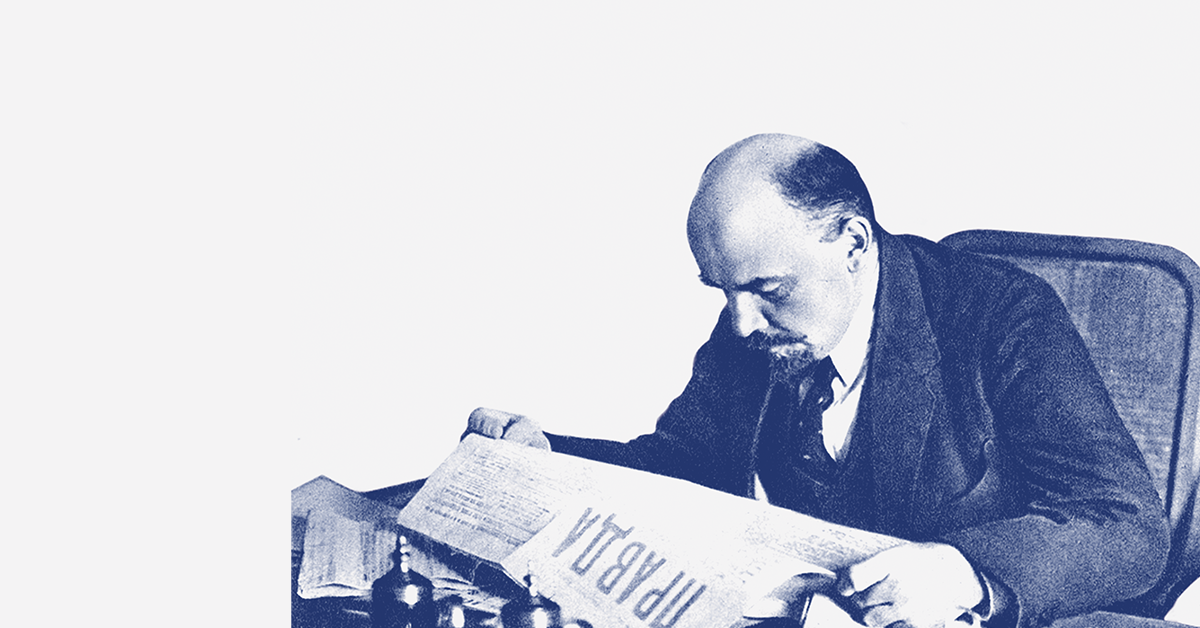
This came true only 40 years later, with the emergence of the two Russian revolutions of 1917, and the growth of the Russian socialist movement across the country, though it was certainly not in Turgenev’s vision. Such a movement emerged from the very critique of narodism, which had developed from its initial movement of ‘going to the people’ in the 1860s to 1870s into a broader populism based on the peasantry. Lenin himself spent his early years writing often exceptionally dry texts, full of tables and charts, arguing with narodniks about whether capitalism had actually established itself in Russia, and consequently the possible emancipatory potential of the affirmation of the mir and other peasant structures.46 Yet, it is not a debate about the character of the peasantry which we face as a recurrent theme in discussions across the left in Britain, but the earlier debates of Turgenev – the act of going back to the people. Many people see themselves as a Nezhdanov or Markelov, though luckily, there have been few attempts to push this forward into practice.
We might say F*ck the North, but it speaks to a real organisational problem: an unevenly embedded and competent left, across an uneven capitalism. However, to close, I wish to indicate some basic ways we may rethink organising in this era. I want to remind people there is a vast chasm that confronts two formally similar ways to think about organising across regional inequality.
On one hand, some argue we must ‘return to the people’ to bring organising to disorganised areas.47 On the other hand, there are those who understand themselves as part of a project to establish a politics across a deeply uneven Britain against the British state and ultimately capital.
The first, whilst cloaked in a claim of concern for these regions, ultimately contains an elitist political kernel. Often it’s suggested that the people in these areas are merely confused, they have been hoodwinked into supporting Brexit, or supporting the far right – if only we were able to ‘tell them the truth’! The level of resistance in this area is understood as merely reflective of the weakness of the left in the area or the fact that people do not know how to organise. It would only take enough people from the left going there, showing these people the error of their ways or how to organise, and the tide would begin to turn. Here there are the ‘organisers’ and the locals, those who understand what is going on and those who are confused, and so on. There is no understanding here of the agency, even potential, of people in this area on their own terms, never mind the dialogue required to begin accelerating such self-activity.
No matter where you go in England, working-class people will be being exploited, and will not be passive in the face of this, nor will they accept the general poisoning of their environment, pressures on their housing, and other symptoms of capitalism in their area. What has been distinct about the protests around both Black Lives Matter and Palestine in recent years has been their geographic spread – the demonstrations in London are of course impressive, but they have been in nearly every major area in England. We have here evidence that runs directly against assumptions that these areas are simply unorganised, waiting for a left which ‘goes to them’. What does it mean to approach each of these areas as places where struggle is already occurring, or at least inchoate? That is the gambit of the alternative approach to regional inequality. That does not preclude questions of resourcing, national interlinking, education and support – but it does demand treating people in these regions as agents in their own right, as existing and potential comrades, who have much to teach us about our uneven polity. To begin to do this, however, requires understanding the regions of the North as already cut through with the divides of class and the changes of the last decades. The question remains one of articulation, not in the form of regional accents, but of the bringing together of various struggles into a whole which can express itself.
This piece is then an invitation for militants spread across the uneven terrain of British capitalism. There is both the longstanding tradition of Marxists considering these problems and the recent authors already mentioned. However, more work must be done together. In the meantime, F*ck the North. Andy Burnham can be King of that nonsense all he wants. We’re building something different.
- Additionally, this applies to the regions of England. It does not refer to the North of Ireland, whose six counties remain occupied by the British state. With regard to the two other territories, for Wales, reference to Gwyn A. Williams, When Was Wales?: A History of the Welsh (Penguin, 1985) and for Scotland, reference to Neil Davidson, The Origins of Scottish Nationhood (Pluto Press, 2000) will suffice. ↩︎
- Richard Jones, ‘The UK has the most regionally unbalanced economy in Europe. Time for change’, The Guardian, 1 November 2017. ↩︎
- Ruth Curtice, Regional economic inequalities: challenges and opportunities (Resolution Foundation, July 2026) ↩︎
- Population Health Monitoring Group, Healthy life expectancy by national area deprivation, England and Wales: between 2013 to 2015 and 2020 to 2022 (ONS, 2025) ↩︎
- Joe Kennedy, Authentocrats: Culture, Politics and the New Seriousness (Repeater Books, 2018). ↩︎
- Daniel Boffey, ‘Labour is miles away from government, says man out to replace Corbyn’, The Guardian, 17 July 2016 ↩︎
- Joe Kennedy, ‘Son of a Toolmaker’, in Mark Perryman (ed.) The Starmer Symptom (Pluto Press, 2025) pp. 87-98. ↩︎
- Joe Kennedy, Authentocrats: Culture, Politics and the New Seriousness (Repeater Books, 2018), pp. 83-84. ↩︎
- Ibid, p 85. ↩︎
- Ibid, p 108. ↩︎
- The original term first generated controversy in the late 1970s as a result of a speech from Althusser, reproduced along with other contributions in Il Manifesto, Power and Opposition in Post-Revolutionary Societies (Ink Links, 1979). See also, Asad Haider, ‘Crisis Theory’, Viewpoint Magazine, 14 December 2017. ↩︎
- Stuart Hall, ‘Blue Election, Election Blues’ in Hall, The Hard Road to Renewal: Thatcherism and the Crisis of the Left (Verso Books, 1988), pp 259-267. ↩︎
- On these debates see Hillary Pimlott, Wars of Position? Marxism Today, Cultural Politics and the Remaking of the Left Press, 1979-90 (Haymarket Books, 2023). ↩︎
- These ideas would culminate in the ‘New Times’ provocation of the late 80s, see Stuart Hall and Martin Jacques, New Times: The Changing Face of Politics in the 1990s (Lawrence and Wishart, 1989). ↩︎
- Stuart Hall, ‘Blue Election, Election Blues’ in Hall, The Hard Road to Renewal: Thatcherism and the Crisis of the Left (Verso Books, 1988), pp 264. ↩︎
- David M Palliser, ‘Domesday Book and the “Harrying of the North.”’, Northern History, 29(1), (1993), pp. 1–23. ↩︎
- E.P. Thompson, The Making of the English Working Class (Penguin, 2013). ↩︎
- Tom Hazeldine, The Northern Question: A History of a Divided Country, (Verso Books, 2020). ↩︎
- Crucial here is the Marxist geographic work of Doreen Massey. In particular, Doreen Massey, Spatial Divisions of Labor: Social Structures and the Geography of Production (Palgrave, 1995) and Doreen Massey, World City (Polity, 2007). ↩︎
- A contentious term, but here referring to the strain of heterodox Marxist groups and writers who grew in prominence from the late 1950s to the mid 1970s. See Stuart Hall ‘The Supply of Demand’, in Out of Apathy (New Left Books, 1960), pp. 56-97. ↩︎
- Raymond Williams, Border Country (Parthian, 2006). ↩︎
- Stuart Hall, ‘Blue Election, Election Blues’ in Hall, The Hard Road to Renewal: Thatcherism and the Crisis of the Left (Verso Books, 1988), p 265. ↩︎
- On the limits of reindustrialisation, particularly the left’s call for an ecological turn, see Nicholas Beuret, Or Something Worse: Why We Need to Disrupt the Climate Transition (Verso Books, 2025). ↩︎
- Take for example the nationalisation of historic steelworks Forgemasters by the Ministry of Defence in 2021, as required for naval and nuclear military capabilities. ↩︎
- Isaac Rose, ‘Manchesterism is not socialism: Andy Burnham’s city is a neoliberal metropolis’, New Statesman, 15 June 2026. ↩︎
- Richard Adams, ‘One in four families move house to secure school place – survey’, The Guardian, 2 September 2015, available at https://www.theguardian.com/education/2015/sep/02/one-in-four-families-move-house-to-secure-school-place-survey. A major policy introduction on general trends is Nicole Winchester, Educational attainment gap: Regional disparities (House of Lords, 2022) available at – https://lordslibrary.parliament.uk/educational-attainment-gap-regional-disparities/ ↩︎
- Nick Bano, Against Landlords: How to Solve the Housing Crisis (Verso Books, 2024). ↩︎
- Mike Makin-Waite, On Burnley Road: Class, Race and Politics in a Northern English Town (Lawrence and Wishart, 2021). ↩︎
- Stuart Hall, ‘Blue Election, Election Blues’ in Hall, The Hard Road to Renewal: Thatcherism and the Crisis of the Left (Verso Books, 1988), p 265. ↩︎
- Ibid. p 265. ↩︎
- Phil Neel, Hinterland: America’s New Landscape of Class and Conflict (Reaktion Books, 2018). ↩︎
- Ibid, p 13. ↩︎
- Ibid, pp 17-18. ↩︎
- The wider tendency of communisation and its exploration of logistics and work over space is useful in this regard for its constant reassertion of world capitalism as an integrated whole, expressed in the work of Neel and Jasper Bernes, ‘Logistics, Counterlogistics and the Communist Prospect’ in Endnotes, Endnotes #3:Gender, Race, Class and Other Misfortunes (2013), pp. 172-201. ↩︎
- Domestically, there remains much affinity with a critical return to Doreen Massey, Spatial Divisions of Labor: Social Structures and the Geography of Production (Palgrave, 1995). ↩︎
- Jonas Marvin, The Breaking of the English Working Class (Verso Books, 2026). ↩︎
- Isaac Rose, The Rentier City: Manchester and the Making of the Neoliberal Metropolis (Repeater Books, 2024) and Isaac Rose, ‘Manchesterism is not socialism: Andy Burnham’s city is a neoliberal metropolis’, New Statesman, 15 June 2026. ↩︎
- Lotte L.S., an economy of starlings: notes from a Reform-voting town (Red Herring Press, 2026). ↩︎
- Ibid, p 36. ↩︎
- ibid, p 64. ↩︎
- Various provocations have been put forward. Such as Callum Cant, ‘Now the Dust has Settled: Corbynism in retrospect’, Notes from Below 19, The Political Leap: Communist Strategy Today (2023), James Butler, ‘Failed Vocation’, London Review of Books, 3 December 2020 and Callum F, ‘The Five Years of Democratic Socialism’, Prometheus Magazine, 2024. ↩︎
- Jonas Marvin, ‘Brexit from Below: Nation, Race and Class’, Salvage, 19 November 2021. ↩︎
- Ben Judah, ‘Maharajah of the Yorkshire Dales’, Politico, 5 May 2015. Judah went on to become an advisor to Foreign Secretary David Lammy, see Joshi Herrmann and Andrew Kersley, ‘A government advisor wrote a libel against London. Why did we believe it?’, The Londoner, 13 December 2024. ↩︎
- Adam Elliott-Cooper, Black Resistance to British Policing (Manchester University Press, 2021). ↩︎
- Paul Huxtable, Sound System Culture: Celebrating Huddersfield’s Sound Systems (One Love Books, 2014). ↩︎
- The majority of these texts are contained in the first three volumes of the Lenin Collected Works, culminating in Lenin, The Development of Capitalism in Russia (Progress Publishers, 1964). ↩︎
- In many ways, one can observe this approach in initiatives promoted by Plan C and other organisations, as explained in John W ‘Mobilise Everywhere’, Plan C, 25 February 2026 available at www.weareplanc.org/2026/02/mobilise-everywhere/. Ironically, despite the initial claim that most struggles today are ‘framing class struggle around the needs of downwardly socially mobile graduates’ in university areas, at the time of writing it has only 4 elements on its map, half in London and none outside a university city, where it seems to be predominately promoting the ‘Global Day of Action for Climate Justice’. ↩︎