In an article in the latest issue of Tribune (“Fortress Westminster”, Summer 2026), Grace Blakeley accurately describes the oligarchical character of the capitalist state, and its corresponding bitter opposition to the Left. She reminds us that “well-organised interests can pile relentless pressure on left leaders, which escalates the closer they get to power. The weakness of socialist counter-organisations means that, most of the time, these leaders end up making compromises—which undermines their credibility … The result is that individuals are scapegoated for larger asymmetries, taking the fall for the relative frailty of our movement.” This is right; and it is certainly true, as Blakeley says elsewhere, that the defeat of Corbynism is not to be explained as an individual failure, but as an institutional failure.
Blakeley infers that our strategy, to overcome the opposition of the state, requires the formation of “mass movements” and “meaningful sites of counter-power—in communities, workplaces and party structures”, in order to “bolster left politicians” who assume some measure of power in the state. But one implication of this argument, of enormous importance, is not drawn out: it is that leftist politicians and activists should devote greater time and zeal to the construction of durable working-class organisations than to capturing high office. For, if it is true that our politicians will be crushed by the oligarchical state so long as we lack strong institutions, then to seek high office before such institutions are established must always lead to compromise, failure, and discredit. To precipitately rush to power is to hope for the end of socialist progress without taking the pains to supply the means.
Applying this principle to the history of Corbynism—where Corbyn’s unexpected elevation to the leadership was not the consequence of a well-organised or impressive Labour Left, but of good fortune—the Corbynites ought to have concentrated their attention on winning the class war in the Labour Party, and not on forming a government. Had the Labour Left won a general election, disaster would have ensued: capital would have fled; Blairites would have rebelled; civil servants and state security services would have resisted; disgrace would have followed. The situation would have been so bad that it is plausible more damage would have been caused to the Left by electoral victory than defeat. Hence it is indispensably necessary to patiently prepare the way to socialism, and not to seek office immediately. If the priority had been the class war in the Labour Party—had Labour been democratised—had the unions been rejuvenated—had socialist groups of all kinds been made affiliates—we might today have at our command one of the great historic parties of Britain.
It may be said, “That is a fantastical vision—reshaping Labour would have entailed countless difficulties.” But if the objection is accepted—if Labour could not be reshaped—how much more fantastical is it to suppose that the British state could have been successfully reshaped! If we do not even allow that we could have won the class war in the Labour Party, how can we possibly believe we might have won the class war in society as a whole?
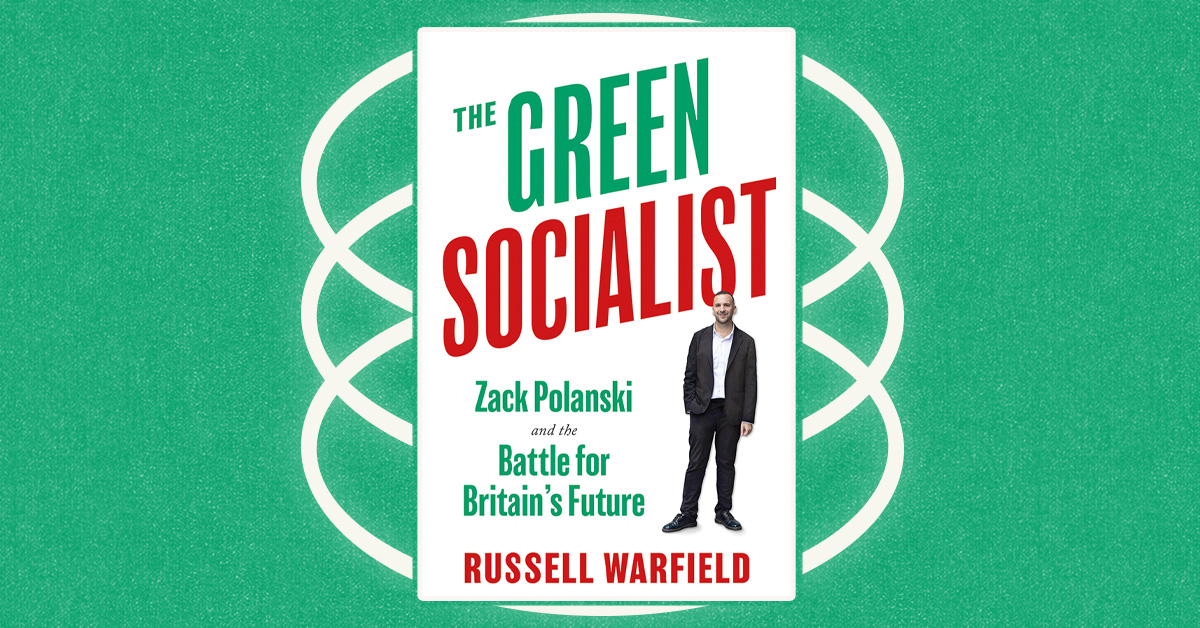
A true pragmatist—a genuine practical politician—will begin with the easier task, which is antecedent to, and necessary for, the completion of the harder task. The class war in a political party is very hard, but less hard than the class war against the capitalist state. The same applies to other forms of socialist work: the struggle against one employer, waged by one union, is easier than the struggle against all employers and the capitalist class generally. What strikes us with regret, in view of these considerations, is how often leftist politicians have been more concerned to win high office than anything else. That was the disposition of Corbynism; it was the disposition of the populist Bernie Sanders in the United States, who did little, especially during Joe Biden’s presidency, to organise the working class; and it seems also to be the disposition of Green Party leader Zack Polanski.
I believe the electoral tactic to be very potent; but to stand in elections and to be in opposition are quite different from forming a government or taking executive authority. The wild dash to power, before the requisite preparations have been made, appears to be the general inclination of populists. Socialists should favour the more principled and more pragmatic strategy of patience.