“If you remove the English Army to-morrow and hoist the green flag over Dublin Castle., unless you set about the organisation of the Socialist Republic your efforts will be in vain. England will still rule you”. 1
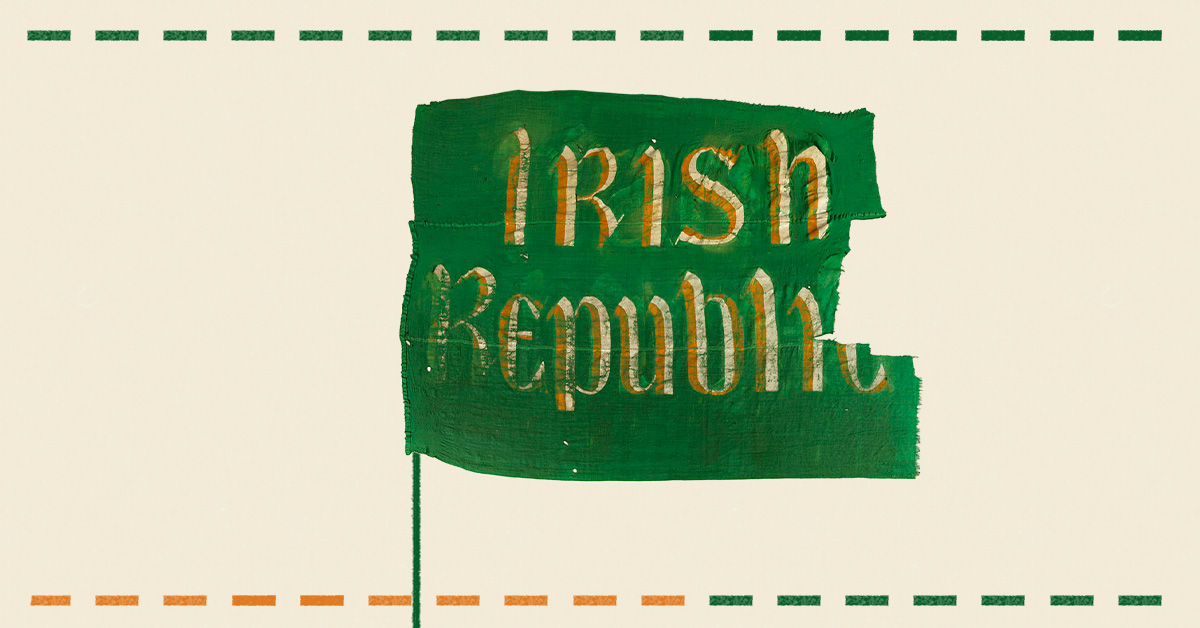
James Connolly’s famous words spoke of a future he feared would come about, should socialism not be won alongside national independence. What Connolly feared, though he would not live to see it, did come to pass in the end. The state that emerged out of five years of conflict that would follow the Easter Rising of 1916 was one built on compromise with the empire, with partition and with reaction. It was with the Irish Free State that, in raising the green flag over Dublin Castle, the British Empire quashed a national liberation movement, partitioned Ireland, and maintained its iron grip over the Irish economy. While Britain’s domination of our economy has lessened over time (being replaced by more modern overlords), the fact remains that the Irish Free State, or as it is called now, the Republic of Ireland, was the product of reaction and the dream of moderate unionists. One would therefore wonder, as we pass the 110th Anniversary of the Rising, why this State would wish to commemorate it. Yet it did, holding a ceremony outside the General Post Office on O’Connell Street in Dublin, which was attended by various important political figures and involved a staged reading of the Proclamation by an officer of the Irish Defence Forces. In interrogating the Irish state’s contradictory relationship with the Easter Rising, I wish to draw out some lessons for the socialists and republicans of today.
1916 and its discontents
From the very beginning, the Irish establishment was opposed to the Easter Rising. Starting on the 24th April, the Rising taking place during Easter week served an ideological purpose, mirroring the resurrection of Jesus Christ with what was perceived as the resurrection of the Irish national spirit. The insurrection itself would last 5 days, during which armed members of the Irish Volunteers, Irish Citizen Army and other nationalist and republican groups seized key buildings around the city and declared the formation of an Irish Republic. Early in the Rising, Irish Volunteers reported that they were warmly welcomed by the poorer residents in Grand Canal Street and Hogan Place but faced far cooler receptions in wealthier areas such as Stephens Green2. Right up to 1916, the constitutionalist nationalism of the Irish Parliamentary Party (IPP) dominated the political landscape. Their domination was so absolute, in fact, that Ireland was functionally a one-party state. In the 1910 United Kingdom General Election in Ireland, the IPP won 43% of the vote, which came out to 73 seats, compared to the runner-up Irish Unionist Alliance’s 18. It was this political force that saw the 1916 Rising as a serious threat to its class ambitions.
Despite John Burton’s claim that “if the 1916 leaders had had more patience, a lot of destruction could have been avoided, and I believe we would still have achieved the independence we enjoy today”, the IPP and the Irish capitalist class it represented did not want to achieve either full independence or a republic3. As John Redmond’s call for Irish men to join the British army during the First World War would show, their goal was to integrate Irish society and culture into the United Kingdom by dampening down Irish aspirations of independence through the winning of Home Rule, cementing an Imperial Ireland, an Irish national identity that was thoroughly imperial and tied to the British Empire. This, of course, never came to pass and in many senses couldn’t have, at least not in the short term. British army mutinies and unionist paramilitaries, armed and abetted by the British establishment, would ensure that, at the very least, partition was inevitable. There would be no enforced home rule.
Instead, the Irish elite got outpaced by a growing movement for independence driven by the deepening social crisis both nationally and internationally, represented by the popular support the Rising would begin to accrue. This did not stop them from trying to reclaim the narrative after the fighting ended in April. An Irish Independent article from 4th May 1916 claimed: “The men who took the initiative in disturbing the peace of the country have not, and had not, a shred of public sympathy”4. As we have already noted, the rebels did in fact manage to garner much sympathy despite the destruction caused, though maybe not from those who would read this newspaper (some things never change). It is also, of course, rather laughable for the author of this article to claim that the Rising disturbed some pre-existing peace. World War One had been raging on for two years at this point, in which over 200,000 Irishmen would fight, and some 3,200 would die in the infamous Battle of the Somme, which would take place just a month after the fighting ended in Dublin5. Evidently, given their wholehearted support for the British war effort, that which the Irish capitalist class lamented was not the damage done to the city, of the lives lost in the fighting, but the harm inflicted upon their facade of a placid and docile Ireland, which they had been trying to maintain.
Similarly, an editorial in the Irish Times read “the surgeon’s knife has been put to the corruption in the body of Ireland, and its course must not be stayed until the whole malignant growth has been removed… Sedition must be rooted out of Ireland once for all”6. Here again, we see reflected the indignation of the Dublin elite at what they perceived, not as a chance at freedom against Ireland’s oppressor, but as the most bitter treachery against what the leaders of 1916, and the Irish people more generally, should have understood as their betters.
In spite of this, the Irish capitalist class could not avoid the popular movement for independence that so readily sprang from the Rising, and reluctantly backed the war of independence. However, as soon as a measly truce was offered, and the limited self-governance they had wanted was granted, they once again flew back to the side of their real masters and class allies, and saw through the counter-revolution that is commonly known as the Irish Civil War.
The Free State Illusion
The Irish Free State was formed by the Provisional Government of the Pro-treaty faction of the Irish Republican Army (IRA). The Irish Republican Army was formed by a merger of the Irish Republican Brotherhood, an oath-bound Republican secret society, and the Irish Volunteers, and would be the armed organisation that fought against British rule in Ireland during the War of Independence. The war would end with the signing of the Anglo-Irish Treaty. This proved controversial, primarily because it established the partition of Ireland, required those elected to the Dáil to swear an oath to the King, and, therefore, importantly, would not establish the Irish Republic that the IRA had fought for over the preceding three years. The IRA and its political wing, Sinn Fein would split over the treaty into the aptly named Pro and Anti-Treaty factions. The Pro-treaty forces would subsequently align themselves with the British Empire, accept arms and financial support from it, and move to crush the anti-treaty IRA.
From the very beginning, the Free State was a loyal imperial subject. Born of the counter-revolution that ended the Irish War of Independence, it nonetheless claimed legitimacy through its tenuous connections to the 1916 Rising and the First Dáil of 1919. It flew the tricolour, despite being a far cry from the independent republic for which that flag had been raised, and sought to rewrite history to obscure its counter-revolutionary origins. The first official state commemoration of the Rising took place at Arbour Hill in 1924, and proved to be somewhat of an embarrassment as Michael Mallin’s widow was the only relative of the sixteen executed leaders of the Rising who attended7. The Free State was unsure how to approach these commemorative events, particularly as the years went on, as they were acutely aware of their place in the history of 1916, the events that followed and the disillusionment that emerged, though they were loath to admit it.
With the establishment of Fíanna Fáil and their ascent to government in 1932, it became somewhat easier for the Irish State to engage in commemorative acts, as for the first time since the Rising itself, it was not the gravediggers of its potential that oversaw the events. It would, too, then be Fíanna Fáil that would oversee the 50th anniversary of the Easter Rising in 1966. By this point, Fíanna Fáil had been in government, on and off, for over 20 years, each time with a simple majority. While they would claim otherwise, they were at this point as deeply entwined into the Free State’s political machine as any other mainstream party.
The Golden Jubilee
The 1960s were a time of great political and economic upheaval, and this was reflected in how both the State and the opposition approached the Golden Jubilee. For the opposition, an assorted collection of communists, socialists, trade unions and republicans, the 50th commemoration offered a chance to really analyse the Rising, and ask the important question: were its goals attained?8 They compared the lofty ideals to which the leaders of the Rising had aimed, and found the modern-day republic to be seriously lacking. They concluded, as we noted above, that the movement for Irish independence had always had two primary currents: those who wanted partial independence and those who wanted a total break with the empire. The 1916 Rising and the events that followed had forced them together, but with the Treaty and the civil war, it was the latter, who saw their connection to the empire as necessary for their development, that had won. It was this class of industrials and large farmers that had reaped the benefits of all the conflict9.
Despite the popular, proletarian sentiments and energies that had made the Rising and the subsequent War of Independence, labour had been told to wait; that the national question had to take priority, and all social conflicts dampened lest the unity of the movement for independence be fractured. This served a dual purpose; it did indeed ensure a unity based on class collaboration; however, it also cemented the bourgeois leadership of the national struggle and thus allowed them to curtail some of the more radical upsurges of proletarian anger and unrest, defending their own economic and political interests. This saw the IRA used to break strikes, such was done in Whitechurch, Youghal and Fermoy. After the IRA split in 1922, this policy of labour subordination was continued by both sides10. Labour, in acceding to this demand, had therefore granted the Irish capitalist class a boon they had longed for. Partial ‘independence’. A partitioned Ireland that would remain subservient to British economic interests. This was something the republican movement, in the line of Liam Mellows, had realised all too late11. However, by the time of the Golden Jubilee, this realisation was coming home to roost.
The Irish establishment wanted to maintain the illusion that the goals of 1916 had been achieved and necessarily had to downplay the social struggles that had made not only the Rising possible, but the conflict thereafter viable. Taoiseach Sean Lemass, then leader of Fíanna Fáil, said:
“We knew that individual leaders of the 1916 Rising, like James Connolly… had their own ideas about economic and social policy, but there was a prevailing mood which tended to discourage not merely the definition of economic and social aims, but even their active public discussion, for fear it might breed dissension in the national ranks”.12
In separating the political from the economic, Lemass sought to downplay the broader social revolution that was taking place within the Rising and the war of independence, and so justify what had been a glorified changing of the guard.
The importance of the Rising in national memory forced this game of re-interpretation into the hands of the Irish state. As we noted previously, it would have preferred not to have had to commemorate the event, but the state’s legitimacy lay in its connections to the Rising and the Dáil of 1919. So Fíanna Fáil continued to commit itself to this narrative and wielded it as part of its class struggle against the workers. Erskine Childers, speaking at a public meeting in Monaghan, said that the greatest tribute to the Rising and its fallen “would be a massive drive by management and workers to increase productivity and seek new export markets”13. The state ultimately wished to tie the Rising to what it perceived as the economic success of the last number of decades, and in doing so, distract from the unfulfilled aspects that the Irish ruling class had been instrumental in preventing. Thus, the 50th Anniversary marked a period of conflict between the same forces that had split during the civil war over the legitimacy of the supposed gains and the very narrative of the Rising itself. This was only the beginning.
The Troubles
By the end of the 1960’s, the conflict that would become known as the Troubles forced the Irish State to rethink how it approached the contested events of the early 20th Century. The Republic, not wanting to do anything to insult its largest trading partner, and its supposedly erstwhile imperial ruler, cancelled all public military commemorations of the Rising and would not resume them until 200614. While officially they claimed that the Provisional IRA15 had sullied the good name of the martyred dead, they did not miss the comparisons between those forces which participated in the Easter Rising, and those men and women who now in the North claimed to carry on their struggle. The commemoration of the revolt would, for the most part, thereafter fall to the republican groups who had contested its legacy.
As if to press the irony of the situation home even more, in 1976, the Irish government banned the planned Republican commemoration under the Offences Against the State Act 1939, making it illegal to celebrate the Rising, the very same government that claimed legitimacy from it, on the streets they claimed were now free. The Irish State’s apathy to the event was such that even on the 75th Anniversary of the Rising in 1991, there was essentially no official state commemoration16. By this point, the Irish State no longer needed to orient itself towards 1916 and its leaders as the basis for its legitimacy and existence. The shadow of that era still hung heavy over the political landscape of Ireland; enough distance had been made between the state and those events that what little connections existed mattered less to both the general population and the State itself.
The Irish state evidently felt that it had freed itself of such an albatross, as in 2020, then Minister for Justice Charlie Flanagan announced a planned commemoration for the Royal Irish Constabulary (RIC) and the Dublin Metropolitan Police force (DMP)17. These forces, of course, were notorious for their brutal acts of repression against the Irish population during the War of Independence, and their work alongside the equally, if not more infamous, Black and Tans and Auxiliaries, brutal paramilitary forces raised by the British Government from amongst veterans of the First World War to fight the IRA. While the planned commemoration was ultimately postponed and then forgotten due to the outpouring of disgust and opposition from the general public, the whole ridiculous situation goes to show where the Irish state and its ruling classes’ allegiance still lies. Not with the leaders of the Easter Rising and their vision for an Ireland truly free of British political and economic domination, whom they conveniently buried and forgot the moment the celebration of their sacrifice became slightly controversial, but with the Imperial Ireland they had fought so hard to defend and maintain, and which they now steer into the waters of new foreign masters.
Conclusion
The Irish State, and the capitalist class it represents, relationship with the Easter Rising of 1916 and the events that followed, has inevitably always been fraught because it lay atop a substantial contradiction. The Republic we live in today is not the republic that the men and women who fought and died in the streets of Dublin had hoped to enthrone. Its true origin lies in counter-revolution, armed and funded by the British state, and birthed on this island by men whose vision of national independence was painting some post boxes green, and replacing the crown with the harp. They throttled the revolution as soon as they got what they wanted, and were ready and willing to throw the rest to the wind. They could not openly admit this, for the social order they wished to instil relied on this claim of legitimacy. However, in the end, Ireland turned out exactly as Connolly predicted. Britain (and more broadly, the international capitalist class) still rules us through its capitalist class, its landlords, and most importantly, through our own native exploiters18.
In all of this, there lies a lesson for us. Labour was told to wait; the political and economic goals of the revolution were separated, and when some limited independence was offered, the Irish capitalist class capitulated completely. This error was recognised by some amongst the Anti-Treaty forces, all too late. What, therefore, remains true is that the working class is the only force in Ireland that can finish the unfinished revolution. Only through the class struggle for a truly 32-county democratic socialist republic can we finally end the domination of Ireland, and usher in the future generations of Irish rebels that have longed to see. If we want to do away with this false republic, labour must never be made to wait again.
- James Connolly, ‘Socialism and Nationalism’, Shan Van Vocht, January 1897, https://www.marxists.org/archive/connolly/1897/01/socnat.htm
↩︎ - Kieran Allen, ‘The 1916 Rising: Myth and Reality’, Irish Marxist Review, 1st January 2015
https://www.marxists.org/history/etol/newspape/irishmr/vol04/no14/allen.pdf
↩︎ - Róisín Higgins, ‘The ‘incorruptible inheritors of 1916’: the battle for ownership of the fiftieth anniversary of the Easter Rising’, Saothar, 2016, https://www.jstor.org/stable/45283315
↩︎ - Unknown, ‘Criminal Madness’, BBC Archive, 4th May 1916, https://www.bbc.co.uk/history/british/easterrising/newspapers/na02.shtml [accessed 26th March 2026]
↩︎ - Allen, The 1916 Rising: Myth and Reality
↩︎ - Unknown, ‘Sir John Maxwell’s Position’, BBC Archive, 10th May 1916, https://www.bbc.co.uk/history/british/easterrising/newspapers/na04.shtml [accessed 26th March 2026]
↩︎ - Allison Martin, ‘Easter Rising commemorations in the early Irish state’, History Ireland, April 2016, https://historyireland.com/easter-rising-commemorations-in-the-early-irish-state/#:~:text=The%20first%20official%20state%20commemoration,the%20executed%20leaders%20who%20attended
↩︎ - Higgins, The incorruptible inheritors of 1916
↩︎ - Ibid. ↩︎
- Robert Nielsen, ‘Irish Soviets 1919-23’, Whistling in the Wind, 2012 https://whistlinginthewind.org/2012/10/08/irish-soviets-1919-23/
↩︎ - Liam Mellows, ‘Notes from Mountjoy’, The Freeman’s Journal, 22nd September 1922, https://cartlann.org/dicilimt/2023/04/NotesFromMountjoy.pdf
↩︎ - Higgins, The incorruptible inheritors of 1916
↩︎ - Ibid. ↩︎
- John Dorney, ‘Commemorating the Easter Rising Part II 1945-2006’, The Irish Story, 19th February 2016, https://www.theirishstory.com/2016/02/19/commemorating-the-easter-rising-part-ii-1945-2006/#:~:text=After%20the%20outbreak%20of%20armed,public%20military%20commemorations%20of%201916.
↩︎ - A successor organisation of the old IRA of the War of Independence, which split from the Official IRA in 1969 ↩︎
- Dorney, Commemorating the Easter Rising Part II 1945-2006 ↩︎
- Ronan McGreevy, ‘Commemoration controversy: Who were the RIC, DMP, Black and Tans, and Auxiliaries?’, The Irish Times, 10th January 2020, https://www.irishtimes.com/culture/heritage/commemoration-controversy-who-were-the-ric-dmp-black-and-tans-and-auxiliaries-1.4134977
↩︎ - And of course still rules directly in the Occupied 6 Counties ↩︎