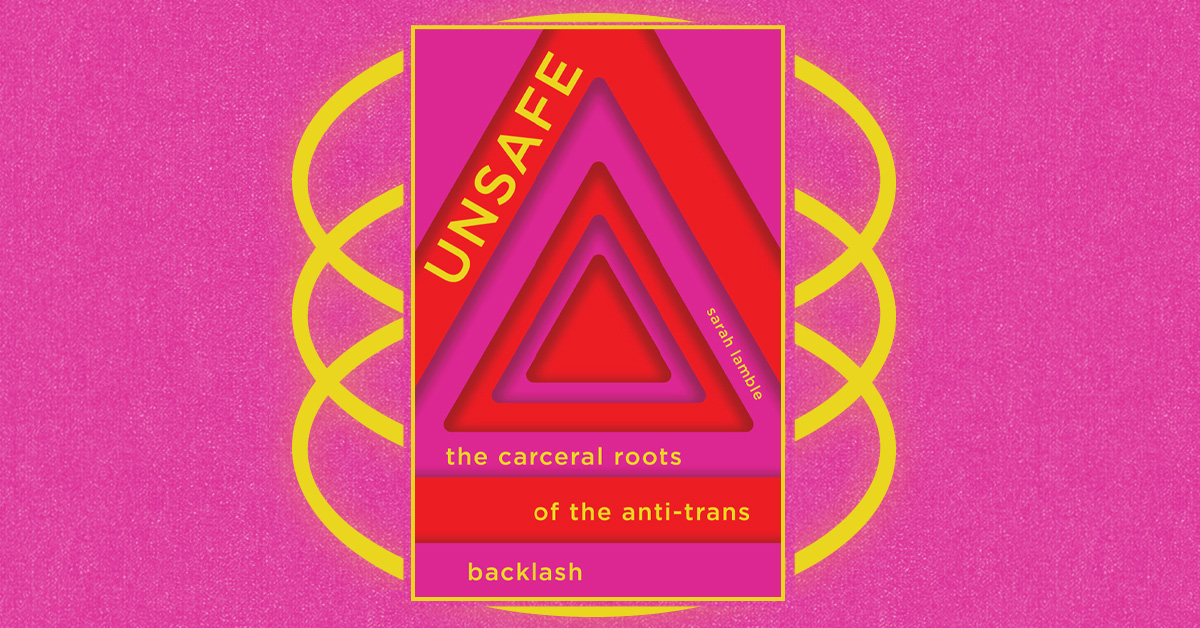
Upon the release of this book, trans people in Britain face an uncertain, fearful moment. On August 5th, the government will update the Equality and Human Rights Commission’s (EHRC) Code of Practice, following the Supreme Court ruling in 2025 on what constitutes biological sex under the Equality Act 2010. This guidance is flawed, legally confusing and is harming the trans community. It is this organisational climate that the trans community faces in Britain. S. Lamble’s book Unsafe: The Carceral Roots of the Anti-Trans Backlash hopes to explore how Britain got to this stage, from being one of the top countries for LGBT+ inclusion in 2015, to one of the global hubs of anti-trans organising, with successful pushbacks against the community.
The left-right divide of carceral safety politics
Lamble’s book is divided into three sections that first explore the carceral roots of the backlash, then explain why carceral safety politics are not keeping the trans community safe, before concluding with explorations on transformative justice as an alternative to carceral logics. The first section of the book is of particular importance for those of us asking why Britain is particularly egregious with its trans antagonism, even within left-wing parties, organisations and trade union movements. Whilst Lamble briefly touches upon the origins of A Woman’s Place UK within trade unionism and left-feminism and their ‘prominent role in early gender-critical organising’ (p. 12), this book is not a detailed genealogy of the left-wing and trade union movements’ history of trans antagonism. Instead, the focus for Lamble is on feminism and the marginal voice of abolitionism within Britain. This includes what, if any, intersections these movements had and also how feminism moved away from ‘a vision of liberation rooted in social, economic and political freedom,’ (p. 63) as seen in the Seven Demands from the Women’s Liberation Movement in 1974, towards a carceral consensus within mainstream feminism in which gendered violence is ‘approached less as a social justice issue and more as a problem to be solved through criminal laws and policies.’ (p. 65) Lamble also argues that carceral safety politics individualises and externalises harm ‘as the result of bad choices, poor morals, or inherent evil, rather than the complex and accumulated effects of structural inequalities, institutional practices and social systems.’ (p. 56)
Significant moments within recent trans organising are explored, including the deaths of trans women prisoners in 2015-16, such as Vicky Thompson, Joanne Latham and Jenny Swift. Lamble also documents how a carceral consensus emerged in trans antagonistic organising, including the significant influence of gender-critical organisers within the media and political institutions. Through this, Lamble examines how trans people are framed within carceral logics, such as the trans faker, organisers moving away from a pro-woman framing to a hostile, anti-trans framing within their campaigning and the subsequent fearmongering towards trans prisoners such as Karen White. Following the announcement of legal gender recognition reform in 2017, gender-critical organisers weaponised narratives surrounding safety, trauma and the policing of everyday lives (seeing like a cop) to produce a carceral safety politics that defines not only trans antagonistic campaigns but also determines how trans organisers themselves respond to the backlash.
For Lamble, the response from the trans community towards backlash and antagonism requires our attention, too. Carceral safety politics reflect a left-right divide, political diagonalism and rival victimhoods. Lamble acknowledges the lack of access that the trans community has to an even playing field against these accusations, but trans organisers reproduce similar carceral logics of disposable others and the externalisation of harm as dangerous others:
Carceral visions of safety gain traction because they appear as “common sense,” yet they fail to confront the root causes of violence. By equating safety with exclusion, they reproduce the very harms and inequalities they claim to solve. Real safety requires structural change, not more punishment, fear, and division. (p. 61)
As a result of this, Lamble’s feminist abolitionist approach can be contentious to readers, arguing that trans people should demonstrate solidarity to transphobic individuals if they themselves have faced gendered violence or that trans people reproduce carceral logics when dismissing all trans antagonistic organisers as TERFs or fascists: ‘In doing so, we exonerate ourselves from the responsibility to address the wider terrain in which transphobic feminism has been allowed to grow and take hold.’ (p. 194). These all represent carceral safety politics, but they also reflect how most of the trans community wants to exclude these sources of harm that define our daily lives. Lamble is, however, very aware of the difficulties of this, including the arduous work of engaging with transformative justice practices that can bring very little in return: ‘most accounts of transformative justice in practice are messy and complicated.’ (p. 187)
The feminist abolitionist narrative in this book does not romanticise community or care, and it is appreciated that Lamble posits uncompromising stances against carceral logics. When reading this, Lamble’s conviction for feminist abolitionism is evident throughout, as someone who has continuously worked with prisoners who might otherwise be seen as disposable others. Lamble still maintains that transformative justice practices, away from symbolic to material safety, are what the trans community need to effectively resist the backlash and to keep ourselves truly safe.
Marxist abolitionism and strategies towards trans liberation
Lamble concludes that transformative justice is already an ongoing process within our organising:
From youth-led direct action to grassroots community care, collective accountability processes, and efforts to redistribute resources for safety—many communities and collectives are already doing the work of building radically different futures. These strategies are messy, partial, and imperfect—but they point to what is possible. Similarly, this book is not a blueprint for change, but a set of frameworks and a map of where to look: trans youth organisers; anti-carceral feminists; prison and border abolitionists; racial justice collectives; survivor-led community support projects; and transnational intersectional justice movements that refuse to choose between freedom and safety. (p. 203)
When reading these examples of contemporary organising, however, what strategies are missing? More importantly, can these practices be effective within our own left-wing and trade union organising (as trans people and allies) in developing an effective opposition against left transphobia?
Lamble acknowledges examples of left transphobia, yet this book limits itself by focusing almost exclusively on feminism and abolitionism. Chapter three is dedicated to documenting how feminism in Britain went from socio-economic demands towards demands for carceral safety. Lamble highlights how safety politics in British feminism from the 1970s did not resort to carceral logics initially, reflecting upon the grassroots, left-adjacent origins of feminist and women’s organisations and charities. Neoliberalism is argued as one of the key factors in the carceral shift, noting how feminist organisers, in facing resource scarcity, had to compete for funding and, in turn, accept the carceral logics that came with this:
Grassroots, peer-led groups were forced to professionalise, expand services, and partner with statutory agencies to survive. This brought increased access to resources but also greater pressure to channel survivors into the criminal legal system. Rape crisis centres were forced into a dilemma: expand and partner with the police or remain small, underfunded collectives. (p. 75)
Lamble also argues that this transition to carceral safety politics within these spaces was also because abolitionism was a marginal voice within Britain, especially compared to the USA. Despite encountering law-and-order politics earlier on, the anti-violence movement in the USA ‘simultaneously faced more organised opposition as feminists of colour actively challenged carceral approaches. These counter-struggles laid the groundwork for a more robust feminist abolitionist movement in the US.’ (p. 79)
Feminist and abolitionist groups in Britain, the USA and beyond are mentioned numerous times in this book. But what is missing from this book are explorations as to how the left (socialists, communists and anarchists) in Britain were impacted by the carceral shift and how Marxists interpret carceral logics when dealing with sectarian isolation, especially when those isolated have committed incredible harm to activists and organisers. If left-feminists and trade unionists are mentioned as early influencers in gender-critical organising, further explorations of how left transphobia emerged in Britain are crucial to develop opposition to this, whilst also maintaining abolitionist, feminist practices of care and safety.
For many trans people, engagement with Your Party in 2025 was a harsh reminder of how normalised trans antagonism is within certain echelons of the left-wing and trade union movements in Britain. From the transphobia of Independent Alliance MPs, to attempts to form factions dedicated to a mechanical materialist, trans antagonistic outlook. These experiences also demonstrated how trans organisers responded to this. On one end, trans people left in droves, either back to being unaffiliated, alienated and burnt out after having to explain our humanity, or to the Green Party, symbolising a political sanctuary away from intra-party trans antagonism.
Meanwhile, others stayed, forming the Trans Liberation Group (TLG), challenging members, pushing for motions at the inaugural conference that enshrined anti-oppression and trans liberation as party policies, strategies that distinguished itself from the NGOs and LGBT+ charities’ approach of petitions, advocacy, legal challenges and working within the criminal justice system. TLG also demarcated itself away from the short-lived, radical affinity groups that replicate Lamble’s carceral logics of exclusion. Whilst some of these groups are valuable for trans people in developing a (trans)feminist consciousness, affinity groups like this also reflect an anti-political tendency in radical trans organising. By anti-political, this means a refusal to engage with most left-wing political projects in Britain because of the normalisation of left transphobia in Britain. Consequently, affinity groups like this are unwilling to interact with potential allies and comrades for the sake of individual comfort and safety, but as a result, this form of organising struggles to progress towards the liberatory goal of gaining material safety for all trans people in Britain. Carceral safety logics are seemingly the default in most forms of contemporary trans organising. Instead, we should seek what TLG member Rosa S calls a material optimism. ‘Our optimism must be derived from what sustains us and from our strategy. Be optimistic because you back yourself, because you know how your opponent works, because you have allies in the struggle.’
Concluding the book, Lamble suggests that the model for trans organisers today is Trans Kids Deserve Better (TKDB), an activist group of trans youths involved in various forms of advocacy and direct action, ‘their focus is not on identity as the basis for moral virtue or recognition, but on material needs, collective well-being, and structural change.’ (p. 200) Whilst commending the activism of TKDB (and the activism of many other trans organisers across Britain), I think the example of TLG should be considered as another model for trans Marxists today, especially as the group begins the process of moving away from the failed project of Your Party, towards refounding as an independent, socialist group for trans people and allies. Transformative justice is about shaping our radical demands as a small group of trans agitators into a revolutionary strategy and towards a material safety and freedom that all trans people deserve. There is also a need for trans Marxists to respond to the spontaneity of direct action groups like TKDB and Bash Back, including a socialist approach that argues for more than just the ‘playful and irreverent, yet militant and unapologetic’ tactics of a ‘ragtag group of transgender youngsters making a ruckus’ (p. 200) that Lamble proposes as the framework going forward.
This framework appeals to novelty and spontaneity, something that the trans community in Britain cannot rely on for our liberation. As the British state continues the legislative and social backlash against the trans community, threatening to repress trans resistance, we have to think about the ‘articulation of a new politics of freedom in an outward-facing manner.’ Trans people are anxious, scared and face repression in almost all facets of daily life in Britain. Working alongside trans communities towards outward organising is an immense feat. Whilst Lamble contributes towards re-integrating materialist, socio-economic approaches to feminism back into collective organising, the limited interventions on the state, Lamble’s lack of other examples of anti-carceral trans organising in Britain and next to no mentions of Marxism or socialism in this book mean what Lamble suggests can only go so far. More exploration on how to cohere the radical work of communities and collectives that Lamble mentions in the book into something that provides a sustained, effective opposition is needed. This requires more insights into contemporary left-feminist activism in Britain, which remains fragmented, concentrated in large urban areas, with little sign towards developing a unified anti-fascist, anti-carceral feminist movement on a mass, national scale that is by and for working-class and oppressed people.
Lamble offers an accessible, valuable book that documents the carceral shift within British feminism towards gender-critical politics, whilst also arguing that any attempt at countering this backlash requires a transformative justice approach. One that seeks to readdress the socio-economic and material safety that keeps us all safe. As Marxists, we must consider how to incorporate transformative justice and feminist abolitionism into our own strategies. Marxism is also essential in filling in the gaps between left-feminist solidarity towards trans people and trans people’s own political engagement with socialism and the workers’ movement. We need an approach that reminds ourselves of the revolutionary and liberatory potentials of (Marxist) abolitionism, whilst also developing an analysis of trans oppression that can break out of the anti-political, affinity groups that symbolically gesture towards liberation.
What is required is directing the fragmented, spontaneous actions from the trans community into a unified political project, one like TLG or something else. British feminism and trans activism are fragmented and divided amongst affinity groups, charities and NGOs. Trans people and allies must continue the work of cohering revolutionary, democratic organisations that can merge trans and/or feminist activism (within socialism and the workers’ movement) into a mass political opposition from the working class and oppressed people against transphobia, carceral logics and capitalism itself.
Thank you, Lamble and Haymarket Books, for providing me with an advanced review copy of the book. In support of LGBTQIA+ prisoners, Lavender Pages and The Common Press are donating books to prisoners for every pre-order of the book.