During 1933 and 1934, the British Union of Fascists (BUF) made a concerted effort to establish itself as a significant political force in Britain. Their ambition was to transform into a mass political party, mirroring the rise of fascist movements across continental Europe. However, this aspiration was decisively thwarted by a powerful and widespread anti-fascist movement that emerged from the grass roots. This popular resistance played a crucial role in preventing the BUF from gaining the widespread support it desperately sought.
For Marxists and socialists, the examination of past struggles against fascism transcends mere historical inquiry. It serves as a vital opportunity to extract crucial lessons from the past, lessons that remain profoundly relevant in contemporary political landscapes. The rise of the Reform Party, now polling as Britain’s most popular political entity, coupled with the influence of movements like Tommy Robinson’s, poses a significant and urgent challenge to the British labour movement. Understanding historical responses to fascism can inform current strategies to counter such threats.
Before we examine the labour movement’s struggle against fascism, we should briefly consider the position of British capitalism in the early 1930s. The Wall Street Crash of October 1929 triggered a global economic downturn that profoundly impacted British capitalism. Reliant on international trade, the nation struggled to maintain its export markets amidst a worldwide contraction of demand. British manufacturing suffered immensely, with factories closing, production lines halting, and millions of jobs lost due to intense competition and a shrinking global market. By 1933, the economic crisis peaked with unemployment exceeding 3 million. This led to widespread hunger, deteriorating slum housing, and inadequate healthcare, highlighting deep societal inequalities.
The political landscape was equally volatile. In 1931, the Labour government, led by Ramsay MacDonald, collapsed due to internal divisions over proposed cuts to unemployment benefits.
Germany, like Britain, was severely impacted by the global economic crisis of the early 1930s. The nation grappled with an unprecedented economic downturn, characterised by soaring unemployment that eventually exceeded six million individuals. This dire economic situation created extreme social and political instability. The German capitalist class, fearing a repeat of the revolutionary uprisings during 1919-1923, concluded that dismantling workers’ organisations was the only solution to safeguard capitalism. They openly funded and supported the Nazi Party, led by Adolf Hitler, instrumental in the Nazis’ rapid ascent as a bulwark against communism.
Hitler’s ascent to power on January 30, 1933, marked a dark turning point. He swiftly implemented his fascist and totalitarian agenda, crushing the organised working class and all other political opposition. The infamous Reichstag fire, falsely attributed to the Communist Party of Germany (KPD), served as a pretext to ban the party and imprison an estimated 100,000 members, effectively decapitating the communist movement.
By July 1933, Germany became a totalitarian dictatorship. Trade unions and the Social Democratic Party (SPD) were banned, and the workers’ press shut down. Hundreds of thousands of communists, trade unionists, and socialists were incarcerated, forced into hiding, or fled the country. This systematic destruction of the organised working class had devastating consequences: wages were slashed by over 25%, the working week extended to 49 hours by 1939, and all industrial action and political demonstrations outlawed, demonstrating how fascism, backed by capitalists, dismantled workers’ rights and freedoms.
The dramatic events unfolding in Germany were not lost on the ruling class of Britain. They observed with keen interest the swift and brutal suppression of the German labour movement by the Nazi regime. This presented the British capitalist class with a profound dilemma, one that mirrored the challenges faced by their German counterparts. How could they restore the profitability and competitiveness of their industries and the broader economy when the British working class was so exceptionally well-organised?
In the 1930s, the British labour movement was a formidable force. Trade unions boasted a collective membership exceeding 3 million, wielding significant social and economic power. Their social weight was particularly decisive in critical sectors such as coal mining, heavy engineering, and the burgeoning transport industry.
Beyond the trade unions, hundreds of thousands of workers were active members of established political parties like the Labour Party and the Independent Labour Party. These organisations provided a political voice and a platform for working-class interests. Furthermore, a diverse array of smaller socialist organisations contributed to the vibrant political landscape. Among these, the Communist Party of Great Britain (CPGB) and the Socialist League were particularly prominent and influential, representing various strands of socialist thought and activism.
The ascent of Adolf Hitler to power in Germany sent shock waves through the British labour movement. There was a profound sense of disbelief and alarm among activists and leaders alike.
Many within the British labour movement struggled to comprehend the ease with which fascism had seized control in Germany. The notion that such a monumental shift could occur “without so much as a pane of glass being broken” highlighted a deep-seated concern about the apparent lack of resistance from the German working class.
As harrowing reports of the nightmarish repression inflicted upon the German working class began to appear in the UK, the British labour movement responded with a wave of solidarity actions. This was a direct reaction to the brutal crackdown by the Nazi regime. Both the Trades Union Congress (TUC) and the Labour Party established a “Relief Fund for the Victims of German Fascism.” The primary objective of this fund was to provide financial assistance and support for the resettlement of German workers who had managed to escape persecution under the Nazi dictatorship.
Across Britain, hundreds of solidarity meetings were organised. These gatherings were initiated by trade unions, local Labour Party branches, and local Communist Party groups. These meetings served a dual purpose. Firstly, they were crucial platforms for raising thousands of pounds, demonstrating a collective commitment to aid those German workers who had bravely fled Nazi Germany. Secondly, they functioned as vital forums for intense discussion and debate.
A consistent theme emerging from these meetings was a profound determination to learn the lessons offered by the German working class’s experience. Labour movement activists recognised the critical importance of understanding how such a powerful movement could be so utterly defeated. The overarching lesson, embraced by most activists, was the urgent necessity for an organised and unified struggle against the burgeoning threat of reaction and fascism within Britain itself. This was a call to action. There was a determined resolve to avoid the catastrophic errors made by the German labour movement. A key failure identified was the inability to forge a united front against violent paramilitary fascist forces, which ultimately led to its destruction. This commitment to a united front involving collective action became a central tenet, emphasising that only through coordinated, mass direct action could the British labour movement effectively resist the advance of fascism and protect its hard-won rights and organisations.
A thorough examination of the anti-fascist propaganda disseminated by the British labour movement during the 1930s reveals a consistent and pronounced class emphasis. This propaganda highlighted the existential dangers that fascism posed to the organised working class.
Leaflets, pamphlets, and posters from this era were not merely informative; they were urgent warnings. They underscored how fascism was fundamentally a mass movement, funded by big business, with the explicit goal of the total destruction of trade unions and all other organisations that represented the interests of the working class.
This material frequently drew stark comparisons with the situation in Germany. It stressed how, since the triumph of fascism there, the German working class had been terrorised and enslaved. Workers were forced to endure massive cuts in wages and significantly longer working hours, all without the protective shield of any independent organisations to defend their rights or interests.
From 1933 onwards, the leadership of both the Trades Union Congress (TUC) and the Labour Party demonstrated a keen interest in channelling their primary efforts into a robust propaganda campaign against the escalating menace of fascism across Europe. This was a decision to raise awareness and mobilise public opinion.
However, alongside this propaganda drive, there was an equally strong determination to ensure that British workers did not engage in militant direct action against the threat of fascism, whether at home or abroad. Consequently, a significant part of their strategy involved actively suppressing the more radical elements within the labour movement particularly the CPGB. They sought to prevent it from organising effectively within trade unions and working with local Labour Party branches across the country.
This stance explains why the TUC and Labour Party leadership took repeated and often severe action against activists associated with the British Communist Party. The CPGB, with its more revolutionary and direct action-oriented approach, was perceived as a threat to the parliamentary system and the class collaborationist strategy of the labour leadership. This repressive action was nothing new of course. Throughout the 1920s the Labour Party and TUC leadership saw the CPGB as a threat and had taken action to shut out Marxists from the labour movement.
In the spring of 1933, the Communist Party of Great Britain found itself in a precarious and largely marginalised position. It was a small, isolated organisation, operating very much on the fringes of the British labour movement. Its membership at this juncture was small, hovering between 4,000 and 5,000. Furthermore, the morale of its members was notably low, and their level of activity was relatively subdued. This state of affairs was largely a consequence of the party’s disastrous social fascist strategy.
The CPGB had adopted a policy of self-imposed isolation, characterised by an intense sectarianism directed towards the established Labour Party and the trade unions. This period, controversially termed the ‘social fascist’ period, spanned from 1927 to 1934. During this time, the Communist Party leadership actively exhorted workers to abandon the ranks of the ‘social fascist’ Labour Party. They even went so far as to encourage members to leave their trade unions, arguing that these traditional organisations acted as agents of the capitalist class within the labour movement.
The CPGB’s directive was clear: workers should instead join the Communist Party of Great Britain to engage in a revolutionary struggle aimed at overthrowing British capitalism. This ultra-left sectarian attitude, however, proved to be profoundly out of touch with the prevailing political realities in Britain.
The vast majority of activists within the British labour movement had no intention of giving up their long-standing and deeply cherished organisations. These institutions had been painstakingly built over many decades and represented the collective strength and aspirations of the working class. Consequently, there was widespread resentment towards the CPGB’s sectarianism. Labelling the Labour Party as a ‘social fascist’ organisation, thereby equating it with the German Nazi Party, was seen as an extreme provocation that alienated potential allies and further entrenched the CPGB’s isolation.
The alarming rise of fascism in Germany served as a profound warning to workers across Europe. It laid bare the inherent dangers of this movement, which, despite its populist rhetoric, was fundamentally backed by big business and aimed at destroying the organised working class. However, this stark reality was not fully grasped by the leadership of the Communist Party of Great Britain and its sister parties across the continent. These parties operated under the centralised, Moscow-controlled Communist International (Comintern), whose directives superseded independent analysis.
By 1933, the Comintern had undergone a significant transformation. Once envisioned as a vanguard for world revolution under the leadership of Lenin and Trotsky, it had degenerated into a monolithic and undemocratic organisation that did not take into account national communist parties and their conditions, enforced abrupt changes in political policy and became an instrument for advancing Stalin’s foreign policy objectives. This shift meant that revolutionary opportunities, particularly in Germany in 1923, the UK in 1926 and China in 1927, were consciously squandered and betrayed to serve the Kremlin’s geopolitical interests which were expressed in the slogan ‘Building Socialism in one country.’
Leon Trotsky who played a leading role in the October Revolution and was founder of the Red Army, was a fierce critic of Stalinism and the Comintern’s political degeneration, offered a scathing assessment of Hitler’s ascent to power in January 1933. He famously declared it “the greatest defeat of the proletariat in the history of the world” and correctly forecast that it set the world on the road to World War Two1.
Trotsky attributed this catastrophic setback directly to the betrayals of the Comintern and the leadership of the German Communist Party (KPD). He argued that their ultra left policies of social fascism, which had prevented a united front of the German working class, had paved the way for the triumph of fascism. This international crisis, marked by the triumph of fascism in Germany and the Comintern’s increasingly bureaucratic and counter-revolutionary role, created deep and significant divisions within the Comintern and its various national sections.
The social fascist policy of the Comintern was a response to political developments in the Soviet Union. From late 1927 Stalin made an adventuristic, ultra left turn in the Communist Party of the Soviet Union (CPSU) policy as part of his struggle against the Right Opposition led by Bukharin. According to this theory, social democratic parties had become the main force impeding the militant activities of the working class at a time when capitalism faced a swift and decisive collapse. Social fascism was a special form of fascism in countries with strong social democratic parties such as the British Labour Party. The role of Communist Parties was to fight tooth and nail against such organisations exposing them as pillars of the capitalist system.
In Britain, specifically, the period from 1933 to mid-1934 was characterised by an internally split CPGB leadership. They struggled to formulate a coherent and unified approach to confronting the growing fascist menace at home, which manifested most prominently in Oswald Mosley’s British Union of Fascists (BUF). This internal discord led to conflicting guidance and a lack of decisive action at a crucial historical juncture.
Following the decisive fascist triumph in Germany, the CPGB leadership issued a clear directive to British workers. They were urged to actively oppose the perceived pro-fascist National Government and, controversially, to abandon the ‘social fascist’ Labour Party.
This sectarian stance, however, was immediately contradicted by the CPGB’s simultaneous call for a united front against fascism. This appeal was directed at the leaderships of the Labour Party and TUC, creating a confusing and inconsistent message. The sectarian nature of this approach meant that the call for a united front largely failed to gain significant traction or support within the broader labour movement. The simultaneous denunciation of potential allies undermined any genuine efforts towards unity.
The united front tactic was developed by the Comintern under the leadership of Lenin whose stated aim was to mobilise the broadest sections of the working class against capitalist attacks on wages and working conditions. It primarily meant joint action of communists and supporters of social democratic parties.
Internal CPGB documents (minutes of the central committee and political bureau) from the period between 1933 and mid 1934 provide compelling evidence of incessant leadership debates. These discussions revolved around the complex and often contradictory task of implementing the Comintern’s sectarian policy while simultaneously making overtures to the Labour Party for a united front.
The release of these Moscow archives in the 1990s has significantly challenged the previously held historical view of the CPGB as a monolithic organisation entirely subservient to the ‘Moscow’ line. Instead, they reveal a party grappling with internal divisions and struggling to reconcile conflicting directives. These archives demonstrate that divisions existed not only within the central leadership but also among local branches. These local groups often found themselves wrestling with the Comintern’s inconsistent and sometimes bewildering anti-fascist directives, leading to some confusion and passivity. However, as we shall see, the more advanced sections of the membership began to ignore the party line and organised independently of the national leadership to confront the BUF on the streets.
Initially, the CPGB’s propaganda efforts were primarily focused on advocating for the overthrow of the National Government. Harry Pollitt, who was general secretary of the party, reflecting this focus, stated, “In actual fact, we are proceeding at a rapid rate towards fascism in Britain, carried out under slogans of democracy and achieved by so-called constitutional means. But most significant of all are the tendencies towards fascism contained in the National Government’s new unemployment bill.2”
However, a more politically astute segment of the CPGB membership recognised a different, more immediate threat. Horrified by the destruction of the German labour movement they correctly identified the British Union of Fascists (BUF), led by Oswald Mosley, as the primary manifestation of fascism in Britain, rather than the National Government. Consequently, throughout 1933 and 1934, the Communist Party’s rank and file took proactive measures. They actively confronted the BUF on the streets, engaging in direct action and counter-demonstrations. This grass roots movement, overlooked by previous historians, played a crucial role in resisting the fascists.
This independent organisation of anti-fascist activity was orchestrated independently of both the CPGB and Labour Party leaderships, highlighting the agency and initiative of ordinary party members. The CPGB leadership initially distanced itself from this grass roots anti-fascist movement.
In January 1934, Harry Pollitt, at the Central Committee, strongly opposed workers disrupting fascist meetings, arguing it would be seen as a ‘brawl’ rather than a political struggle. He advocated for CPGB members to attend BUF meetings, pose questions to the speakers, and expose fascism to the audience, while focusing the party’s main efforts against the National Government’s fascist measures3.
Despite its initially small size, the British Union of Fascists (BUF) experienced a period of rapid growth, expanding to over 50,000 members by the middle of 1934. This surge in membership was not a spontaneous phenomenon but was significantly bolstered by substantial support from capitalist interests, both domestic capitalists and senior military figures and fascist governments in Europe.
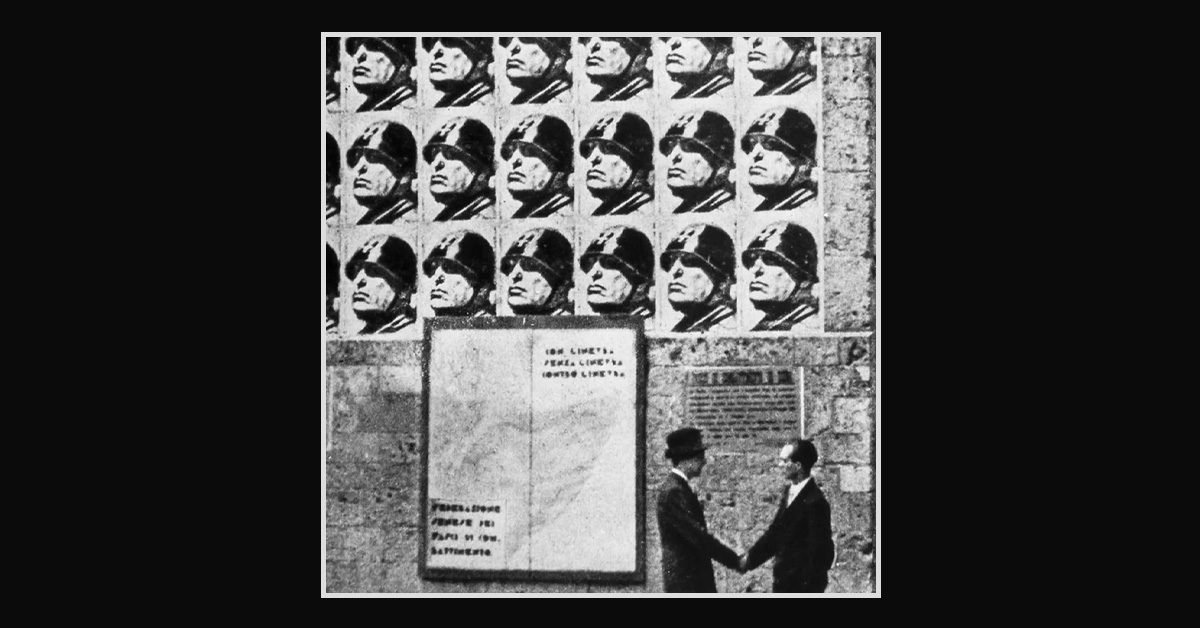
A crucial element of this support came in the form of direct funding. The BUF received a considerable sum of £60,000 from the Italian fascist dictator, Benito Mussolini, demonstrating a clear financial link between European fascist regimes and their British counterparts. In addition to foreign funding, the BUF also enjoyed the public backing of influential figures within the British establishment. Lord Rothermere, the proprietor of the Daily Mail, was a particularly vocal and powerful supporter. His endorsement provided the BUF with a level of legitimacy and media exposure that it would have otherwise struggled to achieve4.
This open support from a segment of the capitalist class revealed a chilling reality. It demonstrated that there were powerful elements within the ruling class who were seriously considering the option of dismantling the organised labour movement if parliamentary democracy proved incapable of maintaining social stability in the UK.
Newspapers like the Daily Mail, Daily Express Evening News and The Times played a role in this process. They enthusiastically praised Hitler’s ascent to absolute power, the brutal suppression of ‘Bolshevism’ and the German labour movement, while ignoring the widespread Nazi atrocities. Instead, they applauded the increased working hours and suppressed wages that were imposed on German workers, presenting them as positive economic developments.
The Daily Mail, Evening News and the Sunday Dispatch also actively promoted the BUF, providing it with extensive and free publicity. This media campaign was instrumental in fuelling the BUF’s growth, particularly in a context of mass unemployment and widespread poverty, where its populist and nationalist message found a receptive audience.
Drawing direct inspiration from the successes of fascist movements in Germany and Italy, Oswald Mosley, the leader of the British Union of Fascists (BUF), adopted similar tactics for the British context. The BUF embarked on an aggressive campaign of public visibility, organising numerous rallies and public meetings across the nation. Mosley himself was consistently the keynote speaker, using these platforms to disseminate his ideology and recruit new members.
A particularly provocative and inflammatory tactic involved organising marches through predominantly Jewish areas, especially in London’s East End. These marches were not merely demonstrations but deliberate acts of intimidation and provocation, designed to incite fear and division. Emulating Hitler’s notorious Brownshirts, the BUF engaged in direct physical attacks on Jewish communities and labour movement activists. These acts of violence were often carried out with a disturbing degree of police complicity, highlighting the class biases present within the legal system. The brutality displayed by the BUF was comparable to that seen in their continental counterparts.
By the spring of 1934, buoyed by the successes of fascist regimes in Europe and the high-profile support he had garnered, Mosley became convinced that the BUF was on the cusp of transforming into a genuine mass party. This support fuelled an intensive recruitment drive throughout the spring and summer of that year. The results were dramatic: membership surged from an estimated 17,000 in February to over 50,000 by July 1934. This period marked the peak of the British Union of Fascists’ influence and numerical strength.
The mass anti-fascist movement from below was crucial in preventing the BUF from becoming a mass party in Britain, a level of influence it never regained. Popular opposition to the BUF surged in 1934, led by the organised working class. The Marxist historian Ted Grant, who was active in the labour movement during the 1930s, later observed, “The British working class gave the Blackshirts their answer. Every demonstration called by the fascists was answered by a greater counter-demonstration of workers and anti-fascists.5”
Local media reports, including those in the Daily Worker, give us an insight into this mass movement from below. They provide numerous reports on disrupted BUF meetings across Britain during the spring of 1934, with fascists unable to hold meetings in ‘Red’ Glasgow and forced to abandon events in places like Dumfries and Ipswich retreating under police escort. In May 1934, over 2,000 workers opposed a BUF meeting in Greenwich. They drowned out the BUF speaker, chanting slogans such as ‘No Blackshirts in Greenwich.’ John Beckett of the BUF faced 10,000 anti-fascists in Gateshead and 5,000 in Newcastle during a Tyneside tour. In Newcastle he was pushed off the platform as the meeting broke up in pandemonium. Mounted police were used to clear a path for Beckett’s retreat from the meeting6.
Despite this grass roots resistance, the CPGB leadership maintained that the National Government, not the BUF, was the primary fascist threat. This strategic division between leadership and rank-and-file is documented in memoirs by London communists such as Joe Jacobs (Out of the Ghetto) and Phil Piratin (Our Flag Stays Red). Jacobs highlights the conflict between grass roots efforts and the London CPGB leadership, with Harry Pollitt noting significant membership distrust in the leadership at a May 1934 Political Bureau meeting.
This internal split is exemplified by the Daily Worker’s lack of call to action against Mosley’s Albert Hall recruitment meeting in April 1934, reflecting the national leadership’s policy of allowing BUF meetings to proceed unopposed. Despite this, hundreds of CPGB members and thousands of non-party workers counter-demonstrated outside the Albert Hall. Jacobs observed that the lack of official CPGB mobilisation meant the opposition was not as organised on anything like the scale it should have been, allowing the BUF meeting to proceed smoothly7.
When the BUF announced another mass rally for 7 June at Olympia, the London District Committee of the Communist Party took no action. However, during mid-May 1934, the CPGB leadership made an abrupt U-turn and changed its policy towards the anti-BUF movement. It came out in favour of a mass mobilisation against the BUF’s planned rally at Olympia. On 18 May, the Communist Party made the call for a counter-demonstration against Mosley’s rally, inviting all labour movement organisations to participate in this activity8.
This change in attitude of the Communist Party leadership towards the struggle against the BUF can be explained by various factors. The CPGB leadership finally realised that the struggle against the BUF offered their party an opportunity to extend its influence within the labour movement and to increase its membership. It also appears to have been influenced by mass pressure from below from those sections of the party membership that had organised against the Blackshirts independently of the King Street leadership. The CPGB leadership was also influenced by the new thinking that was emerging within the Comintern, put forward by Stalin and Georgi Dimitrov. Dimitrov, who had been acquitted at the end of the Reichstag Fire trial in Germany, had begun to call for joint anti-fascist campaigns between the Communist Party and the Socialist Party in France.
It is interesting to note that nearly all of the previous accounts of the CPGB and its struggle against fascism give the impression that the Communist Party was always laser-focused on opposing the British Union of Fascists. From this flows the misconception that the British Communist Party always played a leading role in the struggle against the Blackshirts. They make no mention of the CPGB’s abrupt change of tactics and strategy in May 1934, from opposing the struggle against the BUF to suddenly giving it unqualified support. As Kevin Morgan has pointed out, the King Street leadership saw the National Government as representing the main threat of fascism in Britain, whereas large sections of the Communist Party membership saw the BUF as representing the main threat of fascism in Britain9.
The Communist Party’s sudden about-turn in its attitude to the anti-Mosley struggle was to pay considerable dividends. The failure of the Labour Party and TUC leaders to organise any activity against the BUF meant the field was clear for the Communist Party to assume the leadership of this rank-and-file movement. The former were completely averse to any action on the streets, unable to see beyond the parliamentary approach to politics. Tens of thousands of workers got involved with the anti-Mosley struggle, now officially led by the Communist Party.
The leading role that the Communist Party began to play in the campaign against the BUF brought it considerable prestige and enhanced its standing within the labour movement. For the first time since the United Front campaign started in March 1933, the CPGB began to actively involve sections of the labour movement in its activities, which was a major breakthrough. Despite its delayed start, the CPGB’s campaign against Mosley’s Olympia Rally quickly gathered significant momentum. A major breakthrough came when the party secured the official support of the Engineers’ Union, which called on its members to support the counter demonstration. This was a significant development that lent considerable weight and legitimacy to the anti-fascist cause.
Provincial campaigns against the BUF also continued with undiminished intensity. On June 1st, BUF meetings in both Bristol and Edinburgh were met with large and determined counter-demonstrations. At the Bristol meeting the BUF speaker was hurled from the platform and the meeting ended in chaos. In Edinburgh the anti-fascists were unable to get into the heavily policed meeting, so they waited patiently for it to end. Despite the presence of a large contingent of mounted police, the anti-fascist protestors broke through police lines to the buses waiting to take the fascists away. They attacked the fascists on the buses, causing great damage to the vehicles and hospitalising many fascists in the process. The Daily Worker commented, “The organised thugs, rushing around the country in armoured cars and buses, received another good thrashing on Friday night’’10.
The Olympia Rally itself proved to be a pivotal moment. The brutal and unprovoked violence meted out by BUF stewards against anti-fascist hecklers inside the venue was widely reported and led to a wave of public revulsion. This incident severely undermined the BUF’s attempts to present itself as a respectable political organisation and alienated many of its erstwhile supporters. The aftermath of the Olympia Rally was catastrophic for the BUF. Its membership, which had peaked at 50,000 in June 1934, plummeted to a mere 5,000 by October of the same year. This dramatic decline was a direct consequence of the intense and unrelenting opposition it had faced from the anti-fascist movement.
Historian Nigel Todd has rightly identified this period as a crucial turning point11. The sustained pressure from the anti-fascist movement forced Mosley to begin cancelling meetings, a fact he himself admitted in a letter to the Home Secretary in late June 1934. This was a clear indication of the BUF’s waning confidence and organisational capacity.
The CPGB’s summer campaign reached its zenith with a massive rally in Hyde Park on September 9, 1934. Over 100,000 anti-fascists gathered to oppose Mosley, a powerful and unambiguous demonstration of the strength and breadth of the anti-fascist movement. This event decisively dented the BUF’s confidence and precipitated a period of decline that lasted until 1936.
This detailed examination reveals that the CPGB, after an initial period of strategic paralysis and internal division, eventually came to play a leading role in the anti-BUF struggle. However, this shift was not a voluntary one; it was compelled by the immense pressure exerted by its own rank-and-file members and the broader, spontaneous anti-fascist movement.
The mass anti-fascist movement that emerged from below was, therefore, the crucial factor in undermining the BUF’s ambitions. It demonstrated the power of grass roots activism and direct action in confronting and defeating the fascist threat. Looking back on these events in 1948 Ted Grant argued that the united actions of the workers, “… demonstrated anew the lesson: only vigorous counter-action hinders the growth of the menace of fascism.’’12
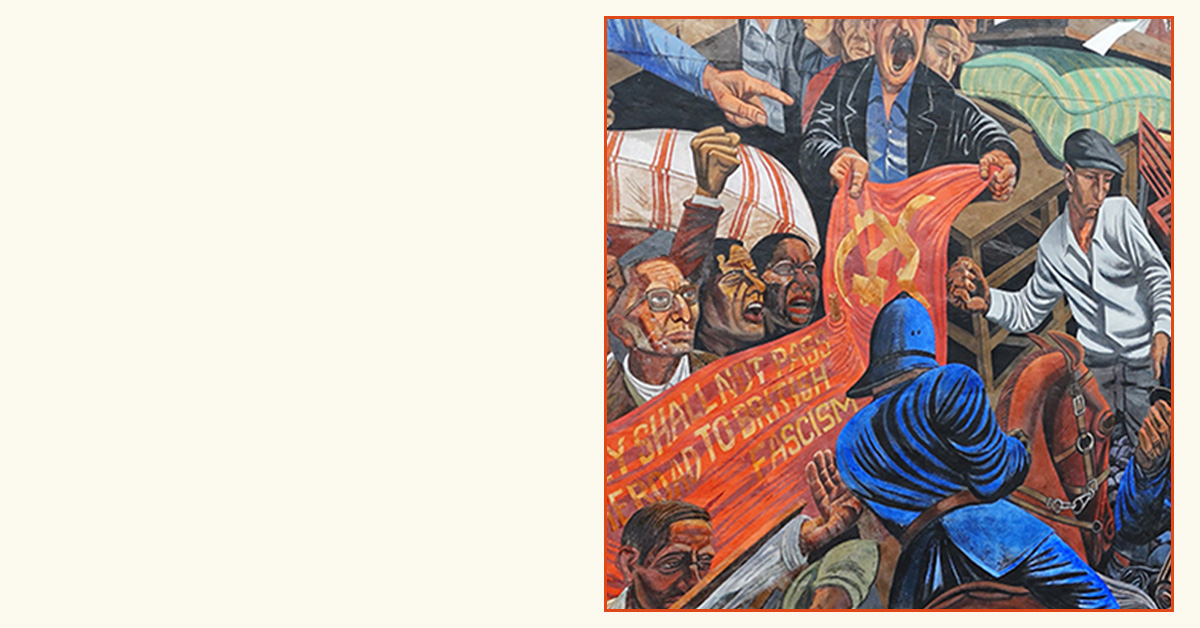
It is important to note that the BUF did experience a resurgence in 1936. This revival was largely fuelled by the rising tide of fascism in continental Europe, particularly in Germany and Spain, which provided a new impetus for fascist movements across Europe. However after the crushing blows which it suffered in 1936, the defeats at Cable Street and Holbeck Moor in Leeds stand out, the BUF went into terminal decline. Public support for the British Union of Fascist fell dramatically and the party fell into internal turmoil which coupled with a financial crisis in 1937 led to the dismissal of key members such as William Joyce. Despite this decline the BUF remained active until May 1940 when over 750 of its leading members were imprisoned, including Mosley. After the war Mosley made an attempt to resurrect his fascist movement but it failed to get significant traction in the face of opposition from the labour movement.
The current rise of Reform and the mass mobilisations organised by Tommy Robinson and other neo-Nazis represent a huge challenge to the British labour movement and wider working class. The defeat of fascism in the UK in the 1930s reveals how effective anti fascist activity needs a communist party with roots in the working class and labour movement which is committed to vigorous mass action and a clear socialist programme. Such a programme has to expose how fascism is an expression of capitalism in decay and represents the desire of the capitalist class to eliminate the organised working class.
References
- L. Trotsky, Selected Writings, 1933-34, (New York, Pathfinder), 1972, 73 ↩︎
- Inprecorr, Vol 14, no.5, (30 January 1934), 130-1. ↩︎
- CPGB, Central Committee, Minutes, 5 January 1934.
↩︎ - T. Grant, The Unbroken Thread, (Fortress Books, 1989), 458.
↩︎ - Ibid, 465. ↩︎
- Daily Worker, 5 May and 19 May, 1934. ↩︎
- J. Jacobs, Out Of The Ghetto, (Janet Simons, 1978), 119.
↩︎ - CPGB, Political Bureau, Minutes, 7 June 1934.
↩︎ - K. Morgan, Against Fascism And War (Manchester University Press, 1989), 22-27. ↩︎
- Daily Worker, 4 June, 1934. ↩︎
- N. Todd, In Excited Times, (Bewick |Press, 1995), 73. ↩︎
- T. Grant, The Unbroken Thread, 466. ↩︎